Unlock profitability with replenishment optimization
Mar 18, 2026 • 6 min
Replenishment no longer sits behind high-profile activities such as buying and merchandising, and is fast gaining recognition as a critical driver of profitability today. Improved store-ordering accuracy and effectiveness have a major impact on sales by improving shelf availability and reducing handling, storage, and shrink costs across stores and other parts of the supply chain.
Accurate, item-level control is virtually unachievable with manual store ordering, which is why automated, system-assisted replenishment has become the default option for companies who are serious about replenishment optimization. The increasing rise of auto-replenishment solutions is largely due to the speed and ease with which retailers have achieved significant gains, often amounting to savings of several percentage points of total turnover.
Beyond automation, systems are moving to AI-driven intelligence that learns and adapts continuously, improving ordering decisions at scale and giving planners greater visibility into why those decisions are made.
To survive in an ever-evolving, complex business landscape, retailers must make automated replenishment an essential focus for replenishment optimization. Businesses that optimize their demand forecasting, inventory management, order cycle, and quantity setting will achieve better efficiency and higher accuracy in their replenishment processes, not to mention greater profitability.
What is automated replenishment optimization?
Replenishment optimization is the process of improving the accuracy and efficiency of a store’s replenishment operations to reduce costs and increase profitability. More and more frequently, this is achieved by combining advanced inventory and safety stock optimization with accurate forecasting procedures to balance inventory while maximizing sales.
Almost every company sees a return from optimizing its store replenishment processes within months, regardless of the types of products it sells. The more SKUs a company manages, the bigger the return they will see from getting the store replenishment process right. The benefits become even more significant when a company carries thousands of products, and they multiply further when there are several warehouses or stores to manage.
Automated replenishment improvements are especially beneficial for businesses where:
- Significant capital that could be better used elsewhere is tied up in excess inventory.
- On-shelf availability levels are unacceptably low (or aren’t measured), resulting in lost sales and lost customers.
- The total cost of product replenishment needs to be lower.
- Replenishment ordering or buying is decentralized and often handled by local managers.
The financial benefits of optimized replenishment are staggering, and the cost savings of adopting a new platform often eclipse the initial investment within a matter of months.
Companies that manage tens or hundreds of thousands of SKUs should use a replenishment system explicitly tailored to their operations to make automated replenishment more accurate, efficient, and cost-effective. Manual ordering in these situations is inevitably labor-intensive, costly, and impractical for the vast quantities of data that need to be analyzed effectively, leading to errors and higher costs.
5 key benefits of automated replenishment optimization
The chief obstacle to embracing automated replenishment comes from the need to either adopt or upgrade to a robust replenishment platform capable of handling the task. Businesses may initially balk at the idea of adopting a new platform for several reasons:
- Fear of the cost of a brand-new platform.
- Preference for developing a platform in-house, despite the human and fiscal cost of development system maintenance.
- Resistance to adopting unknown tools, despite the limitations of existing, legacy solutions.
Building in-house might seem like the more controllable option, but development, maintenance, and ongoing support require dedicated resources and budget that compound over time, and the solution will only ever be as good as the version that was scoped.
Nonetheless, modern replenishment platforms are easy to implement and adopt into retailer practices, especially when managed by an experienced software partner. The financial benefits of optimized replenishment are also staggering, and the cost savings of adopting a new platform often eclipse the initial investment within a matter of months.
The five key benefits of using a modern, automated replenishment optimization system are:
1. Reduced process costs
An automated replenishment system never stops working. It constantly monitors stock, sales, and demand. Human errors, such as forgetting to place an order, are eliminated. A robust replenishment system also automatically adjusts replenishment orders in response to changes in forecasted demand, increasing service levels and sales while improving customer satisfaction. AI-powered systems take this further by learning from historical patterns and external signals to anticipate demand shifts before they affect stock levels, rather than simply reacting to them.
2. Lower stock levels
A well-calibrated store replenishment system classifies products individually and assigns different attributes to them. This allows service-level targets to be set higher for the products customers consider most important and purchase most frequently. By using a system that recognizes sales frequency, profit margin, or sales value, a company can manage inventory to best ensure long-term profitability.
3. Improved inventory turnover
Because a replenishment system can manage safety stocks more accurately than any human buyer, it can also improve inventory turnover. If inventory management is done manually, it is impossible to accurately evaluate the safety of stock requirements for each SKU. Instead, the items must be managed as groups, using basic rules of thumb.
4. Increased service levels
Any worthwhile store replenishment system will be able to calculate and set the safety stock level for each SKU to meet service-level targets as efficiently as possible. This is achieved by factoring in the predictability of demand, delivery lead time, and delivery accuracy for each item. The greater accuracy in inventory management offered by a good replenishment system enables simultaneous increases in service levels and inventory turnover.
5. Enhanced exception management
A quality replenishment system will make the replenishment process more cost-effective. By automating stock-level monitoring and routine replenishment orders, a considerable amount of management time can be redeployed to more challenging tasks, such as assortment planning, supplier negotiations, sales support, exception management, and staff development.
A good replenishment system can also anticipate product shortages, late deliveries, new and seasonal products (where there’s a risk of excess stock), and other exceptions faster than any human. Machine learning makes this anticipation more precise over time, identifying patterns in supplier performance and demand volatility so planners spend less time investigating and more time acting. In many cases, the system can automatically respond to exceptions and, in others, flag them for managers’ expert attention.
The essential features of an automated replenishment system
Every company is different, with its own unique supply chain, cost structure, and management style. Replenishment systems need to fit the company rather than require the company to fit a preexisting system. Such systems must be configurable to support the specific features of each supply chain, and the system’s supplier must understand the customer’s business in all its complexity.
Replenishment systems need to fit the company rather than require the company to fit a preexisting system.
To ensure quick and meaningful results, an efficient replenishment system must also include features that:
- Automatically support demand forecasting at the SKU-store-day level and consider periodic or seasonal variations as well as trends and changes in demand.
- Calculate efficient safety stock levels at the SKU store-day level by considering the predictability of demand, delivery lead times, and delivery accuracy.
- Optimize cost-based order quantities and cycles at the supplier or product level.
- Combine automated routine orders with order suggestions for specific essential items, as well as automatic exception management.
Replenishment is inexorably tied to other supply chain planning functions, such as demand forecasting and inventory management. A worthwhile replenishment platform must also excel in these functions to help retailers create a holistic approach to supply chain management and improve processes across the board, regardless of industry.
The next frontier for replenishment
Agentic AI in retail replenishment is moving from concept to reality: systems that don’t just automate routine tasks but also actively identify problems, recommend actions, and, in some cases, resolve them autonomously. RELEX is already developing agent-based capabilities within its platform, giving planners faster access to root cause insights and reducing the time between spotting an issue and acting on it.
Meet the RELEX AI agents that are shaping the future of retail planning
Smarter replenishment, stronger margins.
Store replenishment is an area where many retailers still struggle to optimize, and while employing every best practice is not always realistic, prioritizing the most feasible and impactful development areas is critical for their business.
An advanced modern solution can evaluate your replenishment needs faster, more accurately, and more cost-effectively than a purchasing team can provide manually. Computers are able to track data more effectively than people, allowing those to shift focus to tasks that computers are unable to do, and managers can focus on further strategic decision-making.
Written by

Related Articles
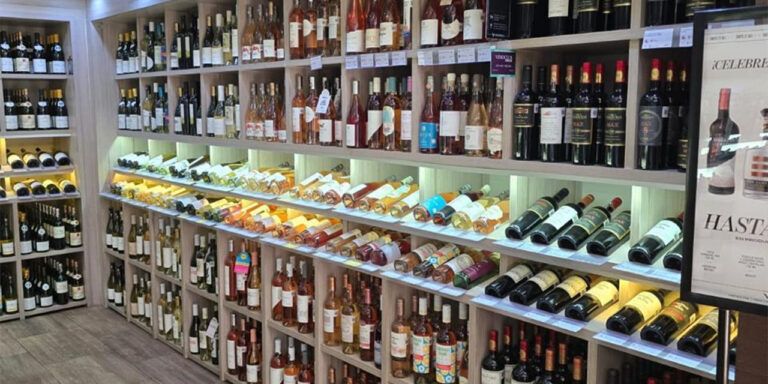
Case Study: Grupo Vinoteca
The Challenge of Growth Without the Right Tools Grupo Vinoteca is one of Mexico’s leading retailers and distributors of wine…
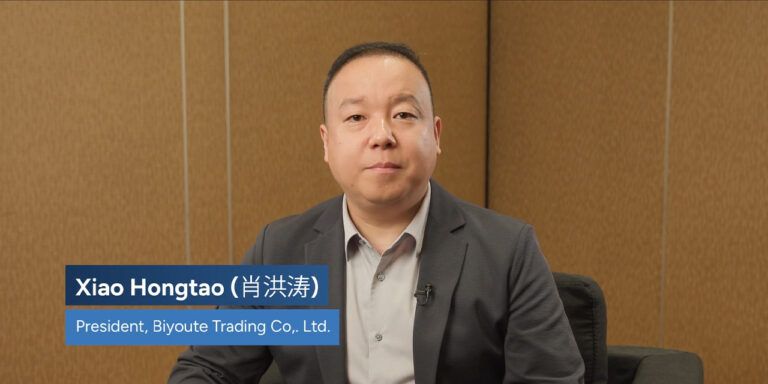
Customer Story: Biyoute Trading
No Stockouts, No Overstock at Chinese New Year: BeYouTe's President on Building a True Partnership with RELEX.
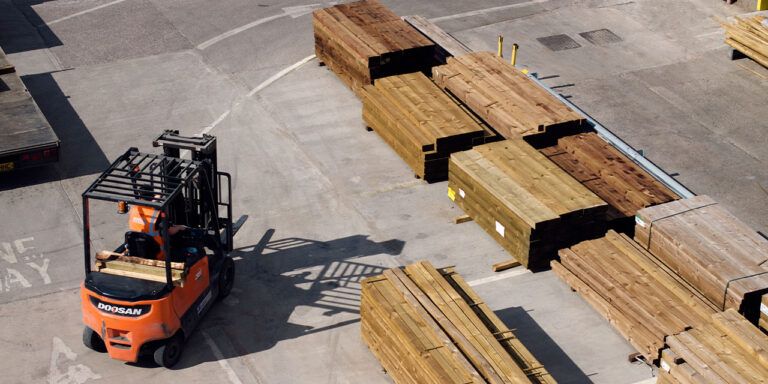
Case Study: STARK UK
Following STARK Group’s acquisition of the UK business in 2023, they inherited both the existing RELEX system and the challenges that had slowed adoption.