Planning to profits: AI-driven forecasting, automated replenishment, and the capabilities that matter
Mar 19, 2026 • 10 min
Efficiency in forecasting and replenishment is critical, yet it remains among the biggest challenges retailers face.
The problem starts with a manual planning process that offers low accuracy and does very little to improve inventory efficiency. When companies cannot meet customers’ needs, customers go elsewhere. What continues to escalate are inventory-related costs, a tough problem when margins are constantly under pressure.
Supply chains continue to grow in complexity, and constant demand fluctuations make alignment with fast-changing consumer preferences and product supply difficult. To top it off, when competition is fierce, inventory mistakes can sour a retailer’s brand and reduce sales.
How do you get products to the right locations with so many factors to consider? And how do you do it while optimizing operational costs?
The RELEX solution: AI-driven forecasting & replenishment for retail profitability
A modern, robust forecasting and replenishment system can help inventory teams delight customers, respond quickly to ever-shifting demands, and make the best use of available inventory and resources.
How RELEX helps retailers achieve value chain efficiency
Unify plans to provide end-to-end visibility
RELEX helps retailers create a single, data-driven inventory plan from suppliers to consumers, enabling effective replenishment and allocation planning. enhanced visibility and cross-functional data sharing helps planners align with commercial, supply, and store teams and respond faster to supplier constraints for more accurate and efficient planning.
Measure demand behavior to improve satisfaction and reduce costs
RELEX forecasting and replenishment capabilities use granular AI-driven forecasts to consider the demand behaviors of both slow and fast moving products as well as the impact of new product introductions, seasonality, promotions, and allocation and clearance decisions on perishable items. This ensures high on-shelf availability and customer satisfaction while keeping inventory levels under control.
Leverage efficiency-enhancing technology to do more with less
Automation and AI allow companies to delegate the grunt work of data processing and calculations to technology, including smoothing store deliveries and accommodating labor constraints. this saves planners valuable time, allowing them to focus their expertise on managing exceptions that require expert judgement calls – all through intuitive tools and dashboards.
Unlock profitable, productivity-boosting replenishment capabilities
To achieve optimal inventory management, RELEX seamlessly integrates automated replenishment with space, inventory, purchasing prices, and operational considerations. This helps planners meet demand while making the most efficient use of available supply and labor, reducing costs for wider profit margins.
Scale with adaptable, future-proof solutions
RELEX features an easily configurable platform with comprehensive data-driven insights for proactive disruption management that users can adjust on the fly to meet changing needs and ensure business continuity amid market fluctuations. Plus, the RELEX solution boasts data storage, processing, and analytics capabilities that scale as the company grows, regardless of how expansive the data set becomes.
Alex Jobin, Lead Solution Principal at RELEX, shares insights into how AI-enabled technology helps retailers cut through complexity and automate difficult tasks while providing visibility and control.
6 keys to driving profit through strategic planning
To help you turn strategy into execution, we’ve outlined a practical forecasting and replenishment checklist below. These essential capabilities, from machine learning-powered demand forecasting to automated replenishment, seasonal optimization, and capacity planning, form the foundation of a modern, end-to-end inventory optimization strategy that drives supply chain efficiency, higher availability, and sustainable retail profitability.
The capabilities below provide a practical framework for analyzing and strengthening your forecasting and replenishment strategy.
1. Evaluate the accuracy and granularity of your forecasting methods
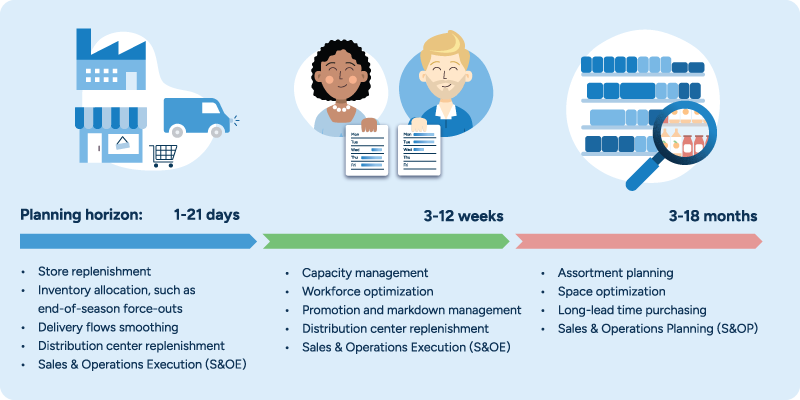
RELEX machine learning-based forecasting uses multiple demand factors to calculate highly accurate, granular forecasts. This granularity gives teams the visibility and control they need to anticipate and meet demand across channels, product types, and planning horizons, while accounting for the impact of promotions and seasonal demand shifts. This ensures greater on-shelf availability, enabling retailers to increase both sales and customer satisfaction.
Read: Complete guide to machine learning in retail demand forecasting
RELEX provides intuitive and configurable tools and dashboards that deliver the right information at the right time.
2. Assess how automated your end-to-end inventory planning truly is
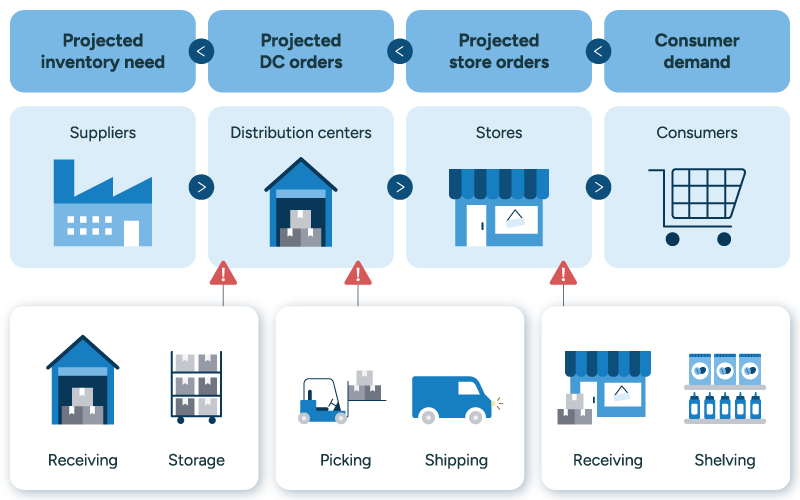
RELEX powers end-to-end planning and optimizes at every supply chain tier by integrating forecasting, replenishment, and allocations. The automated replenishment solution accounts for expected demand, delivery requirements, resource constraints, and supply restrictions.
Smart replenishment orders and allocations, underpinned by accurate forecasts and network-wide visibility, ensure the right inventory is in the right place at the right time. The solution can also optimize purchasing, analyze supplier availability, and identify bulk purchasing opportunities. This multi-echelon optimization drives profits while reducing waste, minimizing spoilage, and minimizing operational costs.
Getting ahead of inventory planning at a time of rapid change isn’t impossible. Explore how to prepare for demand fluctuations with a more flexible, data-driven approach that can adapt to real-time conditions.
Learn more: Inventory planning in an unpredictable world
3. Maximize seasonal revenue with optimized allocation and pricing
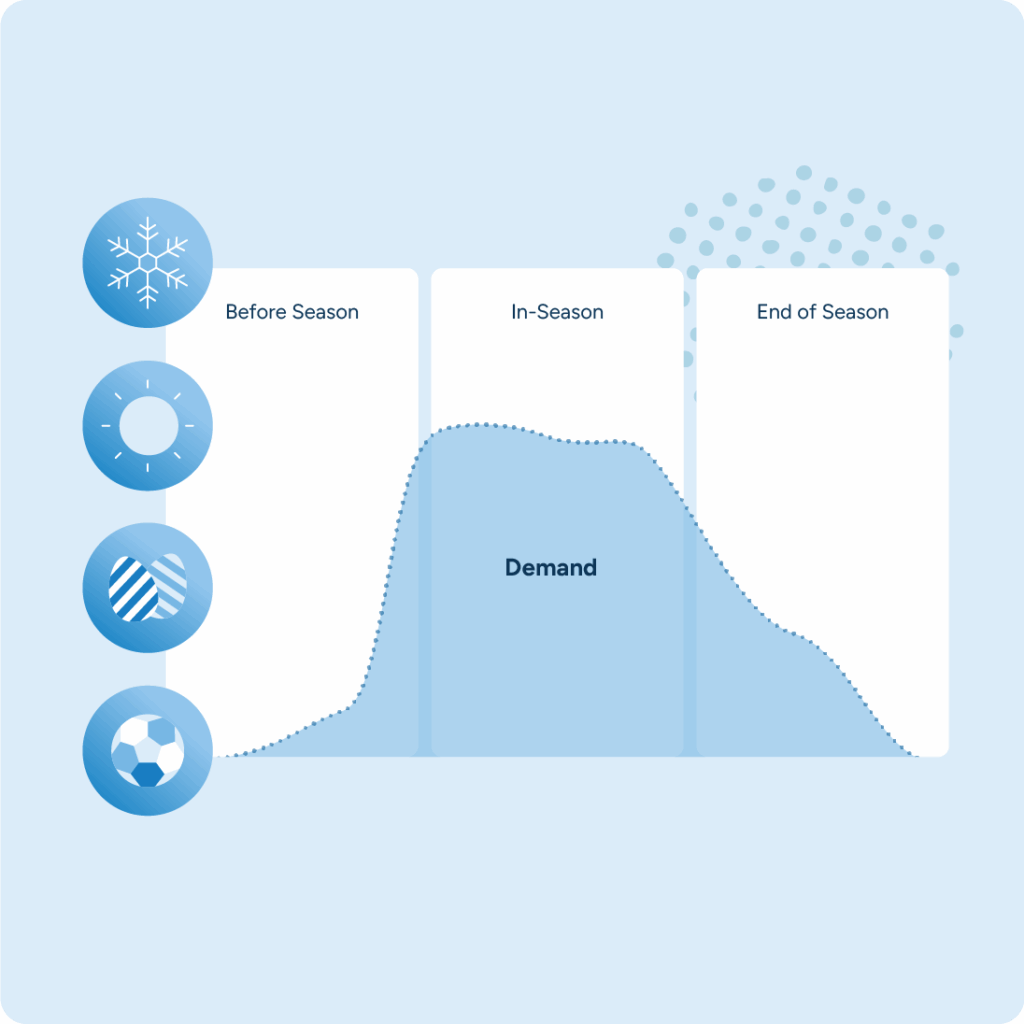
The RELEX seasonal planning capability optimizes allocation decisions to smooth pre-season set-up and maximize sell-through. It also sets optimal prices and discounts to clear any excess inventory, minimizing surplus stock and maximizing available space for next-season items. Accurate forecasting supports availability during peak demand periods and minimizes residual inventory, eliminating process friction before, during, and after the season.
Seasonal planning doesn’t need to feel chaotic,. lLearn more about controlling seasonal retail planning operations, aligning financial, demand, and operational planning across the entire season.
Watch: AI-driven seasonal retail planning turns chaos into control
4. Reduce operational pressure with intelligent capacity optimization
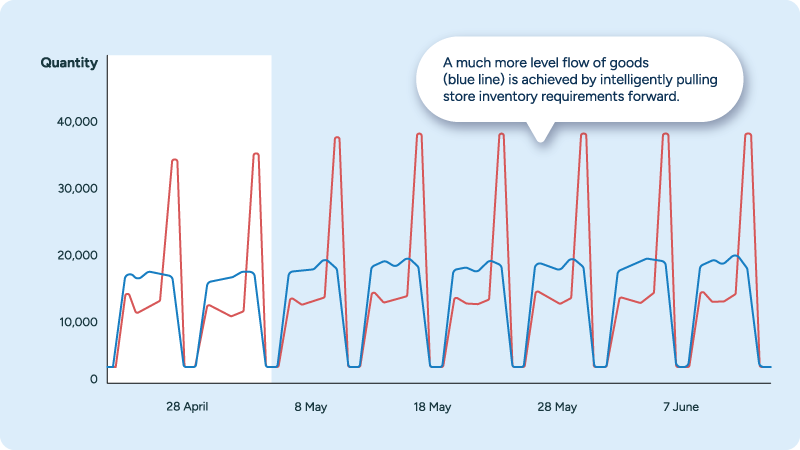
Enhanced capacity optimization enables the most time- and cost-effective use of available resources in store and warehouse operations by smoothing the flow of deliveries throughout the week and during seasonal peaks. It alleviates pressure and reduces bottlenecks by shifting inbound deliveries from peak periods to slack periods.
Capacity optimization also accounts for available shelf space and back-room storage to ensure no store becomes overloaded. This eases the strain on in-store employees, leaving them more time to attend to customer needs.
Learn more: Q&A: How capacity optimization pays dividends in retail operational efficiency
5. Strengthen decision-making with real-time, data-driven insights
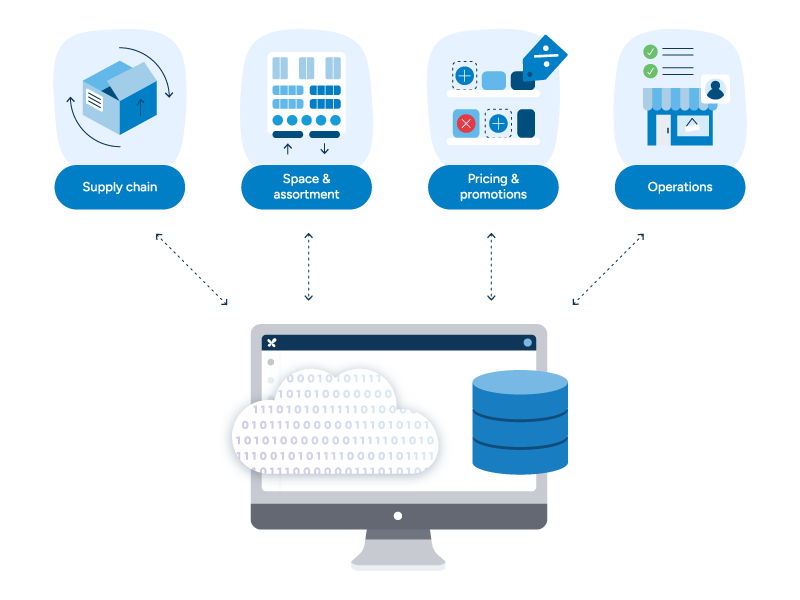
RELEX provides intuitive, configurable tools and dashboards that deliver the right information at the right time for proactive, efficient decision-making. The platform automates routine and complex tasks and pinpoints anomalies so planners can best focus their expertise on high-priority exceptions. Advanced, AI-based diagnostics help them understand the root causes of issues and make decisions that will continuously improve supply chain efficiency and accuracy.
Read: The IT playbook for successful data management in retail planning
6. Unify planning across operations to drive end-to-end visibility
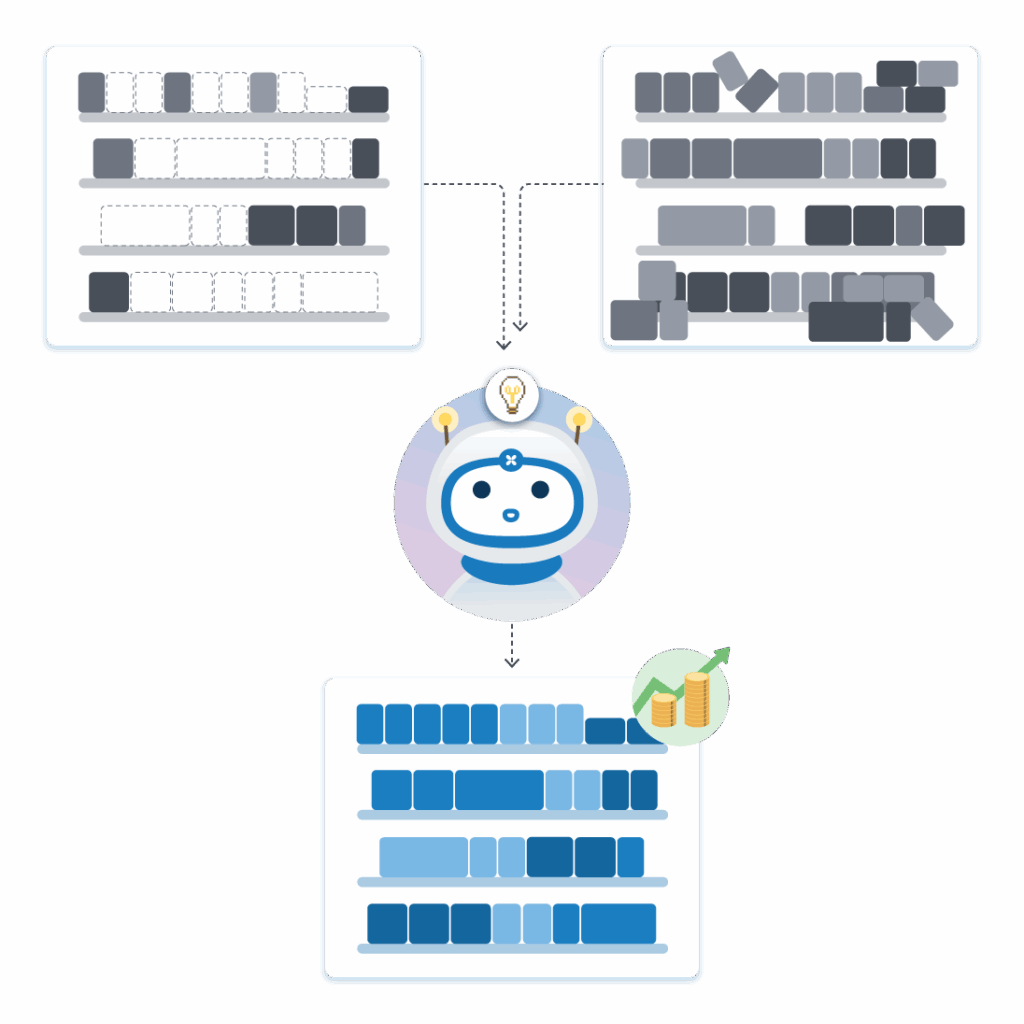
Through network-wide data sharing on a unified platform, RELEX improves end-to-end visibility and decision-making throughout supply chain planning, merchandising, and operations. This cross-functional optimization helps teams optimize shelf space based on local demand and replenishment, reducing stockouts and lost sales. It also improves resource utilization by leveraging supply chain data to align employee shifts with the forecasted workload.
Customer success stories
Effective category management interweaves supply chain, merchandising, and store operations together to support a cohesive strategy, but what does this look like in practice? When category managers are given the tools outlined above, they can achieve great success. Here are two real-world examples of how prominent retailers did just that with help from RELEX.
Europris’ 17% inventory reduction
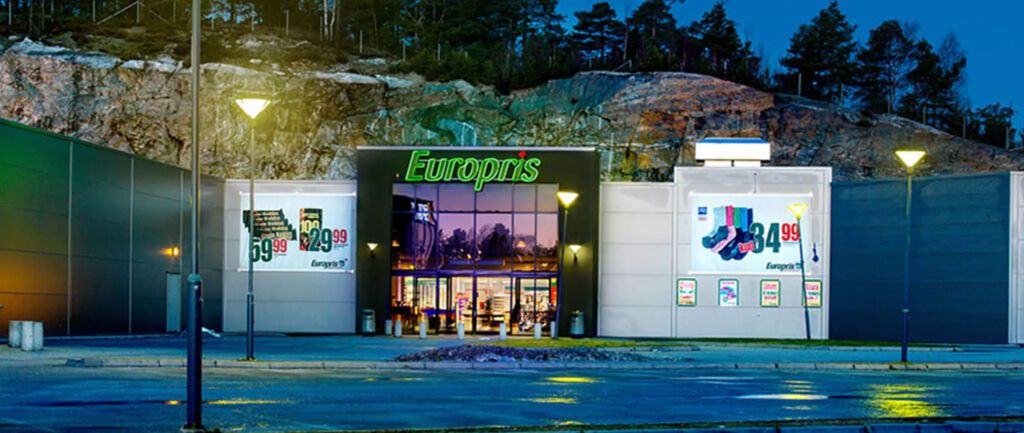
Europris operates more than 230 discount stores across Norway, with a wide assortment spanning 12 product categories including strong seasonal and promotional lines. In 2015, the company set out to transform its supply chain operations to gain better visibility, free up working capital, and improve customer service. Before RELEX, measuring store service levels required physical visits or monitoring customer complaints and there was no clear relationship between inventory levels and availability.
With RELEX, Europris shifted from manual, store-led ordering to a system-driven model. RELEX generates accurate forecasts and order recommendations for store managers to review and approve, freeing teams to focus on customer care, store presentation, and supply chain analysis.
- 17%+ cut in DC inventory in just 18 weeks.
- 7% reduction in store inventory for like-for-like products.
- 91% → 97%+ in-store availability.
- 53% reduction in out-of-stock days.
- 30%+ increase in on-stock products.
- 85% reduction in ordering time.
“Stores feel as though they have an extra employee handling ordering, and that employee is RELEX.”
Marco Pair, Supply Chain Manager, Europris
Stockmann’s near-perfect availability and waste reduction.

Stockmann operates seven major department stores in Finland. Serving a demanding clientele with high expectations for freshness and product quality, the company needed to dramatically increase the proportion of automatically generated orders, reduce manual workload for store and warehouse staff, and improve the reliability and freshness of supply.
Working with RELEX, Stockmann launched an ordering development project in spring 2011. The results were strong enough that Stockmann subsequently expanded RELEX across its entire product range – fashion, cosmetics, homeware, and accessories and later added RELEX Diagnostics for deeper supply chain visibility.
- 40% average waste reduction.
- 99%+ availability maintained.
- 80–90% automation level of purchase orders.
The investment paid itself back in just a few months, thanks to reduced waste and better availability.”
Kimmo Jokilahti, Development Manager at Stockmann.
KICKS unlocked supply chain visibility and reduced lost sales.

KICKS operates 230 beauty stores across Sweden, Norway, and Finland. In a fast-paced category shaped by viral trends and evolving consumer preferences, consistent product availability is critical to brand loyalty and customer trust. With growing supply chain complexity including a warehouse consolidation and an acquisition, KICKS needed to move beyond manual, time-consuming availability analysis and gain clear, actionable visibility into the root causes of stockouts and lost sales.
KICKS implemented RELEX Diagnostics in fall 2024, reaching full operational status within two weeks. During the 2024 Christmas season, Diagnostics revealed that a single supplier was responsible for 39% of lost sales, enabling KICKS to address the issue directly and introduce a new 24-hour delivery follow-up process across their operations team.
- 34% reduction in lost sales value linked to late deliveries.
- 1.8 pp improvement in late delivery rate in just five months.
- Operational in two weeks with cross-functional alignment across supply chain planning, store operations, and excellence teams.
“RELEX Diagnostics has given us clear steps on how to improve.”
KICKS Supply Chain Team
One platform, complete visibility
Modern forecasting and replenishment is no longer just about generating accurate orders. It requires automation across the full end-to-end supply chain, with shared visibility into future demand, inventory positions, and capacity at every tier. It must reflect the realities of your business, from promotions and seasonality to perishability and omnichannel complexity.
Beyond demand planning, embedded capacity optimization ensures operations run efficiently across distribution centers and stores, protecting margins while maintaining high service levels. And ultimately, the most effective solutions are those that elevate human expertise through intuitive dashboards, advanced analytics, and exception-based workflows, enabling planners to focus where they add the most value.
After working with retailers across the world, RELEX has built its platform around one principle: forecasting, replenishment, capacity, and operations work better connected than siloed. That’s why RELEX brings everything together in one unified platform, giving retailers the complete visibility they need to turn planning into profit.
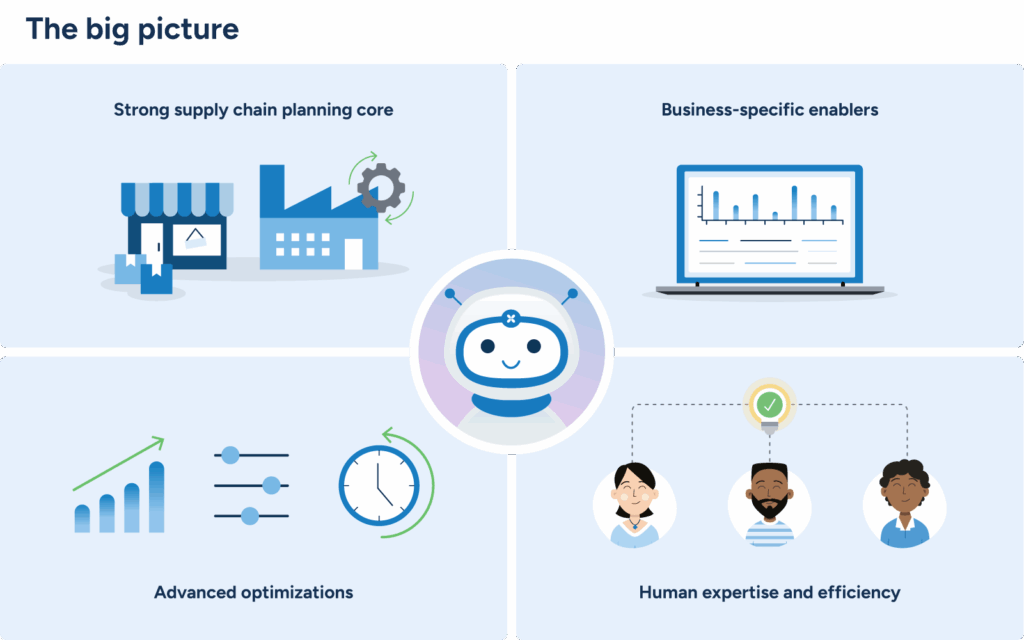
When these capabilities come together on a unified platform, forecasting and replenishment shift from reactive processes to strategic drivers of availability, efficiency, and profitable growth.
Measure what matters: see how top retailers use forecast accuracy to improve planning and profits
Written by

Related Articles
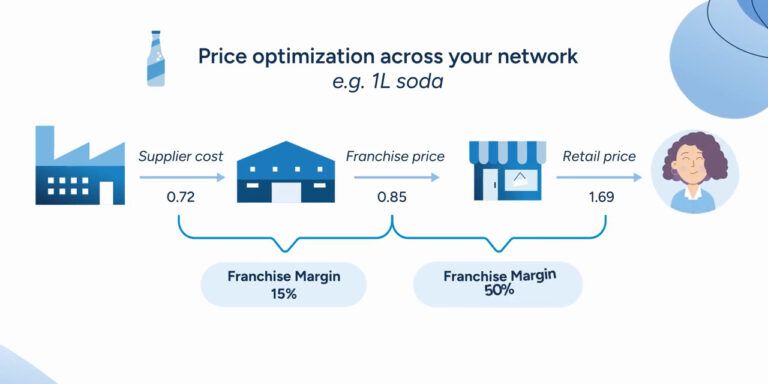
RELEX Franchise Pricing: AI-powered pricing optimization across your network
See how RELEX Franchise Pricing optimizes wholesale & retail prices across every region, category, and store format in one workflow.

Is forecast accuracy driving your decisions? 5 diagnostic questions for planning leaders
Five questions to help leaders figure out whether forecast accuracy measurements are shaping the supply chain or merely filling a dashboard.
RELEX State of Supply Chain 2026: Volatility, trade-offs and the rise of AI
Find out why 77% of retail and manufacturing leaders remain optimistic, even as global disruptions, trade pressures, and demand volatility reshape planning.