
The Challenge with Pricing Retail Products
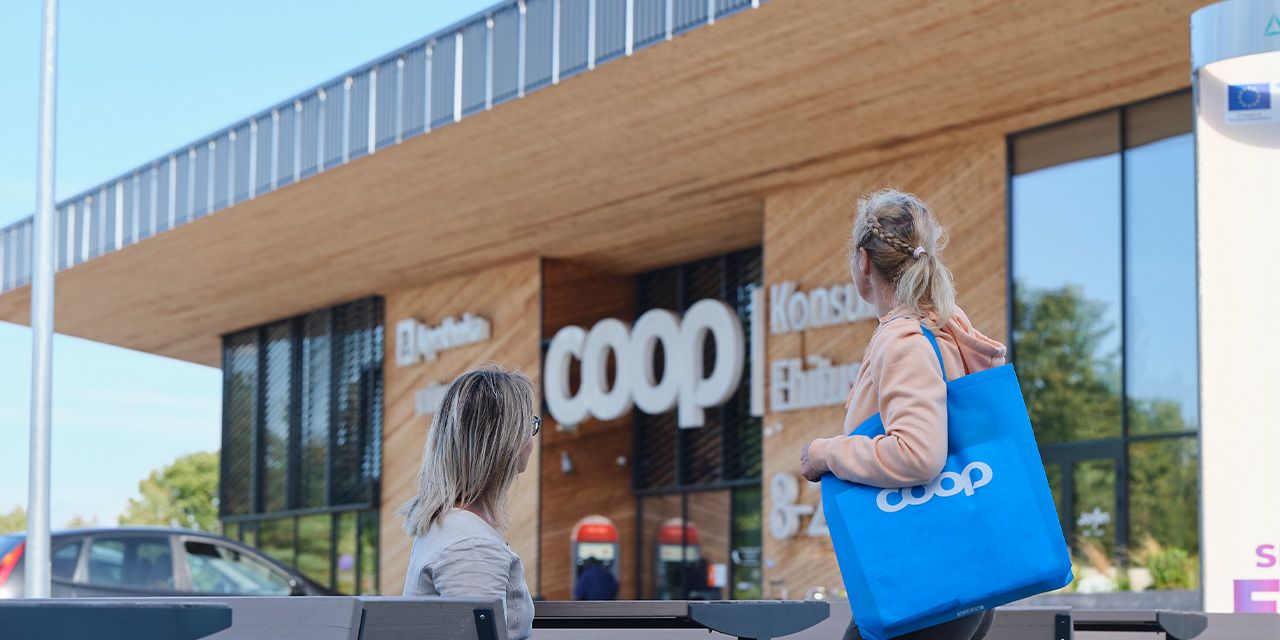
Coop Estonia is Estonia’s oldest grocery retailer, serving shoppers since 1917, growing into a market leader with roughly 23% of the Estonian retail market. They have 320 stores and one distribution center (DC), managing 25,000 product SKUs. Coop Estonia competes against seven major retailers in Estonia in a market where price perception can shift. Consumers tend to form an impression of where to shop based on a set of staple products they buy often, such as milk, bread, and eggs. If these products are priced correctly, the retailer can earn trust in value that extends beyond the products that are being compared.
Coop Estonia priced products using a rule-based, markup-percentage model. This rule was applied to every product within a category, regardless of how shoppers engaged with the product. Key value items customers compared had the same treatment as long-tail items that few people price check. This dynamic put pressure on Coop Estonia’s pricing model, especially as the process was manual, with competitor prices tracked in spreadsheets. Coop Estonia’s goal was to introduce a process that priced the basket, not just the product.
Changing the Unit of Decision-Making
Coop Estonia selected RELEX to introduce this new pricing approach following an evaluation of functional fit. Coop Estonia already use RELEX for forecasting and replenishment since 2018, seeing measurable successes. They have also used RELEX promotion since 2024. The pragmatic approach was to build on the data already in the RELEX environment and develop a system that did not need an additional level of integration.
Coop Estonia and RELEX built a framework around roles instead of individual SKUs. This meant defining category roles (traffic driver, margin contributor, basket builder, destination category), product roles within category (basket builders, frequency leaders, catalysts, margin drivers), and key value item tiers that capture how price sensitive customers are to any given product. Strategic objectives such as competitive position, margin targets and growth priorities then determine how these rules are set. The idea was to set pricing logic once at the role level and let the system apply it across all products, rather than treat each SKU as its own decision.
From Framework to Measurable Results
Since introducing the new solution, more than 5,000 SKUs have been reviewed and more than 30 categories are live on the framework, producing a 0.6% margin increase in reviewed categories as part of the rollout. Across 20 measured categories, the base price margin improved by 0.50 percentage points, with 15 out of those 20 categories showing gains, and outpacing the parent category benchmark by 0.47 percentage points. This is evidence that the gain reflects the change in pricing decisions rather than broader market movements.
The strongest individual category results included spices (+2.68 pp), sugars (+2.22 pp), instant foods (+1.64 pp), ketchups (+1.64 pp) and breath fresheners (+1.12 pp), the last of which was the only category to combine margin improvement with volume growth. Overall sales volume held broadly steady, tracking parent category trends rather than declining because of pricing changes.
“We have taken a conservative approach with more than 5,000 SKUs reviewed and over 30 categories live, but the results speak for themselves. There has been a real margin improvement in the categories we have touched, without losing volume. Rather than chasing every category at once, we have made the decision to prove the model works. That discipline is exactly why we trust the numbers we are seeing now,” said Erik Eelrand, product owner, Coop Estonia.
Coop Estonia has also been careful to separate real pricing wins from results that are being driven by promotions. In one category, underlying pricing had improved but a sharp rise in promotional share masked the gain in the total margin figure. In another, weaker pricing was offset by a drop in promotional share, making the total look better than the pricing itself performed.
This lesson is driving Coop Estonia’s next stage in development to coordinate pricing and promotional planning in the same framework, a principle that the role-based structure was designed to support. Further, Coop Estonia sees an opportunity to connect pricing decisions more closely with forecasting and replenishment already run on RELEX since 2018, a step towards a unified view of supply chain and merchandising decision making across the business.