
Growing Complexity Demands New Approach
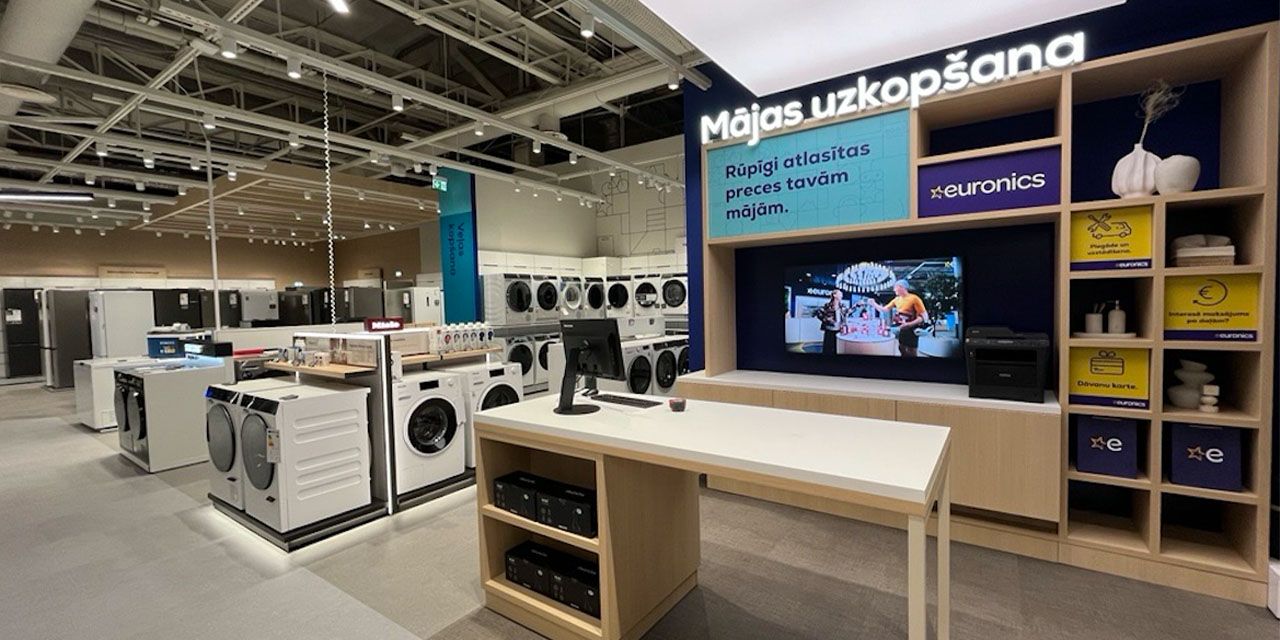
Sandman Group is the largest wholesale distributor of consumer electronics and home appliances in the Baltics. Since its founding in 1992, Sandman Group has grown from a wholesale business in Estonia into a multi-country business operating physical stores, e-commerce, and a highly automated distribution center (DC) serving all Baltic markets.
Sandman’s recent growth has added complexity to their business. They manage thousands of slow-moving SKUs with long supplier lead times and have significant differences in store size and demand patterns. Planning was highly manual, dependent on spreadsheets and individual expertise, and teams were organized by country rather than as a single Baltic operation.
When Sandman expanded into Latvia and Lithuania, this model became harder to sustain. The Sandman Group leadership understood that future growth would require automation, standardization, and a more data-driven approach to demand forecasting and replenishment.
From Local Silos to Unified Baltic Platform
Sandman selected RELEX in 2021 to automate forecasting and replenishment across its stores, e-commerce channels, and DC. They wanted to improve forecasts, scale regionally, and build a foundation for long-term operational efficiency.
RELEX helped Sandman move away from static, store-level reordering to dynamic, system-driven planning that continuously adapts to sales trends, promotions, and supply constraints. After stabilizing core forecasting and replenishment processes, Sandman introduced machine learning (ML-) forecasting and later, pooled models.
ML-forecasting improved accuracy across slow and fast-moving products, while automated ordering reduced manual effort and planning risk. Pooled models allow Sandman to group similar products and locations, improving forecast accuracy even where individual sales volumes are low. Beyond forecasting and replenishment, RELEX supported broader capacity and stock management goals, helping Sandman balance availability, working capital, and labor productivity across the network.
Implementing RELEX required significant change management as the Sandman teams had to shift from local, manual decision-making to centralized, system-driven planning. Sandman’s leadership invested heavily in communication, training, and stakeholder alignment, and over time, the benefits became clear. The automation reduced dependency on individuals, improved resilience, and created a more balanced workload. Planners now spend less time maintaining spreadsheets and more time improving assortments, managing suppliers, and supporting growth initiatives.
Measurable Gains Across Inventory and Availability
Sandman improved stock availability by 2.18 percentage points, ensuring customers are more likely to find the products they want in store and online. They also increased turnover by 16% while reducing inventory by 11%, demonstrating tighter stock control without sacrificing sales. This is especially valuable in consumer electronics, where many products sell infrequently but still need to be available to meet customer expectations. By improving forecast accuracy at SKU level, Sandman increased availability while carrying less stock overall.
Labor efficiency also improved significantly, as consolidating planning teams across countries cut reliance on spreadsheets and manual processes. Most replenishment orders are now generated automatically, based on established rules and delivery schedules. Planning continues regardless of holidays, travel, or individual availability, reducing operational risk and freeing teams to focus on exceptions and strategic decisions. The gains in automation have also strengthened decision-making across the business, from assortment planning to supplier collaboration and capacity management.
RELEX has played a critical role in Sandman’s regional growth. When Sandman expanded into Lithuania, they applied the same unified planning model already established in Estonia and Latvia. The assortments were standardized, planning rules reused, and the teams were integrated. This consistency allowed Sandman to scale quickly and efficiently, helping them to quickly become the largest player in the Lithuanian consumer electronics market. RELEX supported this expansion by providing the structure, automation, and visibility needed to operate as a single Baltic business.
“Before RELEX, planning lived in spreadsheets, which made the business fragile as we grew across markets,” said Jan Andre, Chief Commercial Officer, Sandman Group. “RELEX helped us challenge the idea that every country and store was completely unique and showed us how much more efficient we could be by planning as one Baltic operation. Automation now handles most routine decisions, so our teams spend their time on exceptions, suppliers, and improving the business instead of maintaining files. That shift has allowed us to grow faster, reduce risk, and manage a very complex assortment with much more confidence.”
Sandman views RELEX as a long-term partner, and after seeing the measurable improvements in availability, turnover, and labor efficiency, they continue to expand their use of RELEX capabilities across forecasting, inventory optimization, and capacity management. With a unified planning foundation in place, Sandman is well positioned to grow further, adapt to supplier volatility, and manage complexity.