Q&A: Finding harmony in retail connected planning
Dec 31, 2025 • 6 min
Rohit Tripathi, VP of Industry Strategy & Manufacturing at RELEX, sat down to discuss the journey of harmonization in retail connected planning and its transformative impact on how manufacturers connect and collaborate with their retail partners. We explore what harmonization means, why sensing demand requires fusing sell-in and sell-out signals rather than choosing between them, and walk through the key stages of strengthening retail partnerships and driving mutual growth.
Listen to the full conversation:
Q: What is harmonization in retail connected planning?
A: (Rohit) The harmonization journey in retail connected planning involves transitioning from a silo-based sell-in planning approach to a more consumer-driven plan that encompasses the concepts of “sense,” “share,” and “shift.”
- Sense: The manufacturer uses store-level point-of-sale data, inventory positions, promotions, and even weather data to forecast the true demand.
- Share: The demand view and the key constraints are synchronized between the manufacturer and the retailer partners so that everyone plans on the same basis.
- Shift: AI-driven automation executes most of the forecasts, operating in a ‘touchless’ way.
Q: How is sensing demand different for manufacturers who’ve largely focused on sell-in forecasts?
A: (Rohit) Sensing demand means examining what consumers are actually purchasing at the store level. This is based on point-of-sale data, in-store inventory data, and not just on what was shipped into the retailer’s DC based on historical records.
For example, one manufacturer using RELEX now plans for item-level store forecasts and promo signals, which has helped them increase their sales on A-category items by nearly 5% while reducing inventory on the B, C, and D-category items by almost 5 to 6 percentage points. Indeed, sensing is bringing the manufacturers and retailers closer to the end consumer.
Learn more: From chaos to collaboration: Transforming demand management
Q: What prevents manufacturers from accessing retailer POS data to immediately sense demand?
A: (Rohit) The first barrier is commercial. Retailers need to trust manufacturers and agree on how point-of-sale data is shared and used between them.
Even when the data is available, planners often juggle with multiple retailer portals and spreadsheets, which leads to fragmented workflows and makes it hard for them to turn this POS signal into a consistent and accurate view of demand.
So, it’s a combination of both commercial barriers and ensuring that you have a more streamlined workflow to provide a consistent view of your operation’s performance.
Q: How are data sharing and data access different in retail connected planning?
A: (Rohit) Data access simply means that the manufacturer can log into the retailer portal or perhaps have access to the point-of-sale data. It’s just a more static activity. Whereas data sharing means that the ingested information is continuously mapped, cleaned, and synchronized into one planning system for both parties.
For instance, at RELEX, we have a Nordic poultry customer where the producer connects their daily production plans directly to the retailer’s RELEX system. They’re both working from the same auto-generated projections and tracking the same KPIs in real time. So, both sides are seeing the same demand and inventory picture and can act together.
It’s the difference between just having access to information (which is data access) versus using that information to plan and execute together, which is data sharing. That’s where real value can be unlocked.
Q: What are the requirements for turning demand signals into action?
A: (Rohit) Manufacturers need a platform that can handle the scale of point-of-sale-based data. We’re talking about point-of-sale information across thousands of SKUs and locations. That’s massive volumes of data constantly streaming in.
Then, they need to take that data and convert it into more concrete plans of action, such as replenishment orders, production plans, and signals to suppliers.
Today, RELEX does this through ML-based forecasting, multi-tiered replenishment, inventory management, and diagnostics. The system pushes store orders to the DC level and uses them to define production requirements.
Instead of planners spending time manually executing plans and aligning everything, RELEX handles it all automatically. They only need to intervene in exceptional circumstances, anomalous situations that require human creativity.
Q: What is autonomous execution in the ‘shift’ stage of the journey?
A: (Rohit) Autonomous execution means that the RELEX system, powered by both specialized and generative AI, can adjust forecasts and orders on its own within the agreed-upon rules as defined by the business.
These autonomous capabilities empower planners to focus more on supervision and handling edge cases.
Let me give you an example. For one of our customers, Atria, its forecasts are now touchless.
Autonomous algorithms from RELEX now manage the day-to-day planning, including seasonal demand and retail campaigns, without the need for constant manual adjustments. When you’re leveraging AI capabilities in the supply chain in this way, that’s when you’re truly in the shift stage.
Learn more: RELEX + Atria Finland: AI-enabled supply chains driving efficiency
Q: How do the three stages of planning harmonization create value that’s greater than the sum of their parts?
A: (Rohit) That’s a very interesting question. First, sensing improves forecast quality because you’re now bringing in richer, customer-related information, like point-of-sale data. You’re bringing in external drivers such as weather and promotions. This produces nearly 98% accuracy for our customers and minimizes production expenses.
Now, building on that sensing comes the next piece, collaboration. Once retailers and manufacturers are collaborating on shared data and plans, both operations naturally generate less waste and avoid stockouts. Atria, which I previously mentioned, gets a forecast accuracy uplift of 2 to 4 percentage points.
The third and final stage is autonomous execution. This stage scales these gains across manufacturers and CPG companies. This leads to better on-time availability, better on-shelf availability, improved inventory position management, and, most importantly, higher customer service levels.
Q: What are the indications of success for manufacturers on their harmonization journey?
A: (Rohit) You need to establish very clear KPIs, which to me are the only real measures of success. Useful indicators include high forecast accuracy with minimal manual overrides, higher on-time-and-in-full rates for orders, and fewer hours spent reconciling different portals and files, which directly improves planner productivity.
The most critical measure, however, is on-shelf availability. And when I say on-shelf availability, I mean both physical and virtual shelves. If the product isn’t on the shelf, the consumer isn’t buying it. To me, that is the ultimate success metric because it directly connects to business performance.
We’ve seen it with RELEX customers. A two-percentage-point improvement in on-shelf availability drives nearly a one-percentage-point increase in sales. That’s powerful.
Q: What’s the most important thing manufacturers need to understand about planning harmonization?
A: (Rohit) Getting closer to the end consumer is the goal of all manufacturers. What planning harmonization does is align every production decision to what consumers are actually buying.
This is where balancing sell-in and sell-out forecasts comes into play, using shared point-of-sale data and joint planning with retailers. Now, with AI-driven automation, manufacturers aren’t relying just on historical DC shipment data or historical POS data, but on real-time insights.
This leads to higher service levels, less waste, and fewer penalties from retailers, because manufacturers are now in tune with actual consumer demand.
Written by

Related Articles
Case Study: Sandman Group
Sandman selected RELEX in 2021 to automate forecasting and replenishment across its stores, e-commerce channels, and DC.
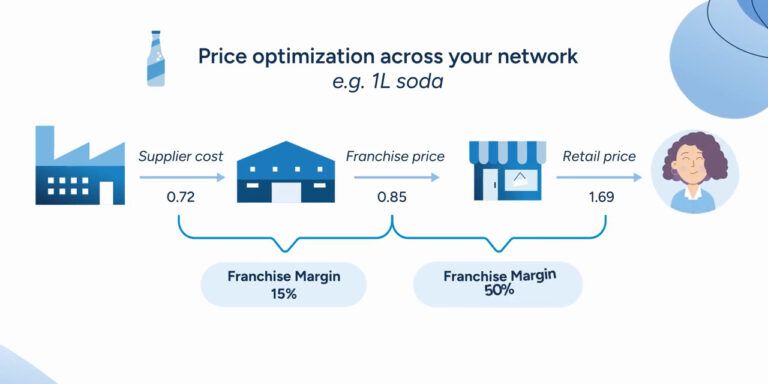
RELEX Franchise Pricing: AI-powered pricing optimization across your network
See how RELEX Franchise Pricing optimizes wholesale & retail prices across every region, category, and store format in one workflow.

Is forecast accuracy driving your decisions? 5 diagnostic questions for planning leaders
Five questions to help leaders figure out whether forecast accuracy measurements are shaping the supply chain or merely filling a dashboard.