
Meeting Growing Complexity with Smarter Planning
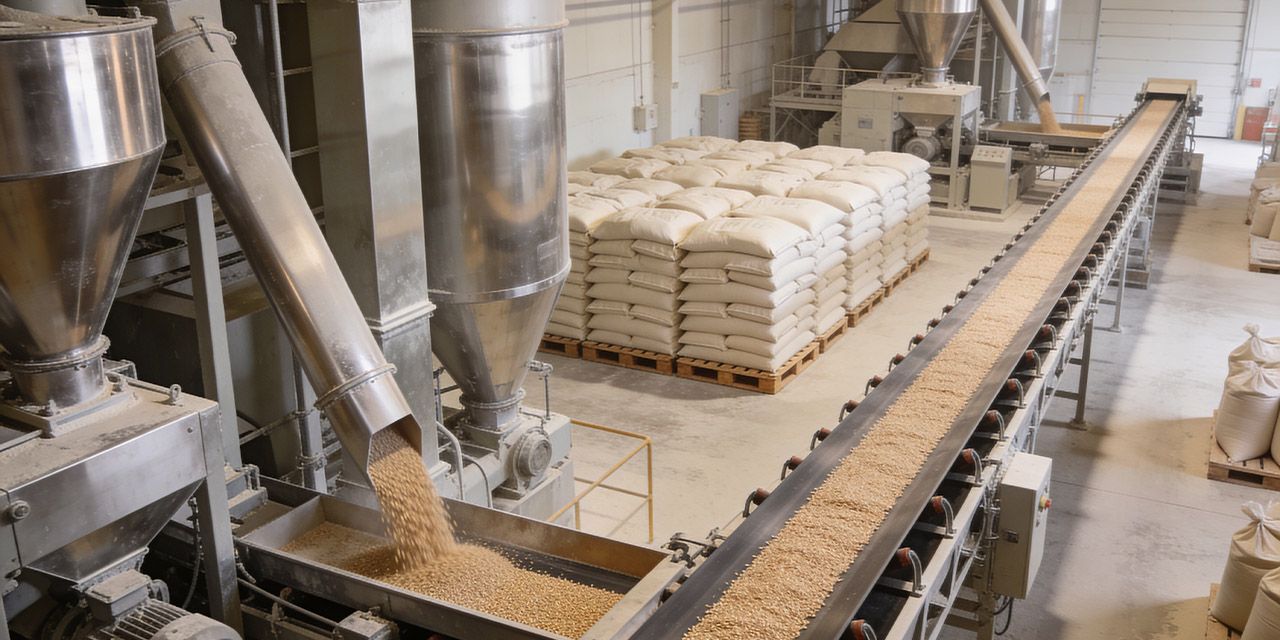
Prima Flour, established in 1961, is Singapore’s pioneering flour mill and part of the Prima Group. They have evolved into a leading supplier of high-quality flour products, serving both retail and industrial markets across the globe. Operating a high-volume facility that produces multiple flour streams from each milling run, Prima Flour produces over 180 flour formulations and premixes.
As the business expanded, manual, spreadsheet-based planning made it difficult to balance interdependent production flows. Before implementing RELEX, production and demand planning were handled by individual section heads coordinating daily. Customer demand was manually extracted from their legacy system, and the planning process relied on unstructured communication which could lead to issues in meeting production targets.
Prima Flour’s co-product milling process produces multiple flour streams at once, making production highly interdependent. As SKU complexity increased, manual planning lacked the visibility and accuracy needed to balance supply and demand. Also, fragmented communication between sales, production, and the Prima Flour plant meant changes in orders or forecasts were not reflected in real time, affecting production decisions.
Comprehensive AI-driven Production and Demand Planning
Prima Flour selected RELEX in February 2023, implementing production planning and scheduling along with demand planning. RELEX stood out for its ability to model diverging co-product production and apply mathematical optimization to complex, interconnected manufacturing environments. This is essential for addressing the complex balancing act inherent in flour production.
Demand planning went live quickly, creating immediate value for Prima Flour. The production planning component required additional data preparation and ERP alignment, which revealed opportunities to improve long-standing business practices. During implementation, Prima took the opportunity to clean up several processes, including shared item codes, inconsistent purchase-order handling, and outdated shipment scheduling.
Collaboration between Prima Flour specialists and RELEX consultants ensured a smooth implementation despite the added complexity of simultaneous process improvement. Once the team became familiar with the new system and understood how it benefited their daily work, they adapted well, resulting in smooth adoption.
From Manual Expertise to System-Driven Resilience
Prima Flour has replaced manual, spreadsheet-based planning with a system-driven production planning process that centralizes production and demand planning in RELEX. This allows them to scale SKUs and enter new markets without increasing planning effort. This has also helped with improving coordination across production and the Micromix plant and eliminating past inefficiencies.
Section heads at Prima Flour report a significant reduction in the time required for daily production planning and scheduling, allowing them to focus on higher-value activities. The implementation has also delivered faster and more accurate wheat purchase projections, enabling better supplier relationships and inventory management.
Teams across sales, production, and Micromix operations now work from a single, validated plan. Changes in customer demand flow seamlessly through the system, eliminating past misalignments and enabling faster, more confident decision-making.
“RELEX’s AI-based capabilities were critical to handling product planning challenges,” said Steve Ang, General Manager, Prima Flour. “The solution has automated our daily planning, improved planning efficiency and given us greater visibility across teams. We plan to continue exploring additional ways to maximize usage and the value from our investment as it is a powerful tool. We look forward to exploring the use of any newly added functionalities that Prima Flour can take advantage of.”
As Prima Flour prepares the move to a new production facility in 2027, RELEX will continue to support scalable growth by automating daily planning, improving cross-team coordination, and optimizing complex co-product production.