
The Hidden Cost of Ordering Without Data
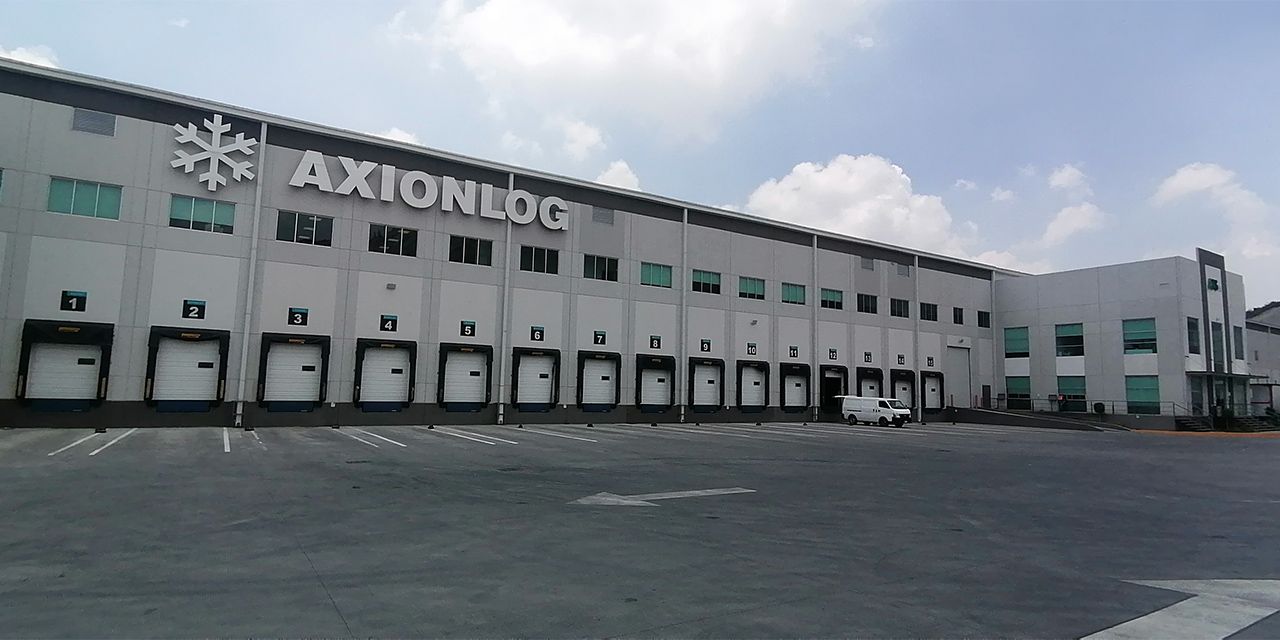
Axionlog is a leader in supply chain management services that manages end-to-end supply chains for major quick service restaurant (QSR) chains across 17 territories in Latin America, the Caribbean, and the United States. As a logistics supplier, its ability to keep restaurant shelves stocked directly determines whether its clients can serve their customers, making supply chain accuracy both an operational metric and a competitive differentiator.
Historically, Axionlog managed that responsibility through manual processes and individual expertise. Every week, restaurant managers across its client network spent two to three hours per location building orders from memory and visual stock counts, entering figures into spreadsheets with no ability to account for seasonality, local events, weather, or promotional demand. Forecast accuracy across the network sat at just 23%, producing a constant cycle of overstock that tied up working capital and generated waste in perishable categories.
The limitations of this manual approach became clear during a promotional campaign by one of the world’s biggest fast-food brands, which drove a sudden surge in demand that the existing process was not built to absorb. Without a system to anticipate and plan for that kind of surge, the team had to make real-time adjustments using spreadsheets. With 17 territories, each operating independently and planning quality dependent entirely on individual planner experience, it became clear they needed a more scalable, intelligent approach.
Building a Smarter Supply Chain, One Client at a Time
Axionlog selected RELEX forecasting and replenishment capabilities following a six-month evaluation that tested multiple platforms against the specific demands of a multi-country operation, with implementation supported by RELEX partner Wysupp. RELEX stood out for its ability to produce the best purchase recommendation in every scenario tested, and at the fastest speed. The platform offered real-time simulation that allowed planners to respond to shifting demand, promotional surges, and supplier changes on the fly. Its machine learning capabilities also provided a level of intelligence that the systems they had relied on previously simply could not match.
The implementation was deliberately phased, starting with DC-level replenishment in 2024. Forecasts generated by the platform fed directly into synchronized purchase orders across Axionlog’s distribution network, replacing fragmented buying decisions with a unified planning approach. Phase two extended the platform to store-level suggested ordering, rolling out client by client across Axionlog’s network.
By taking a gradual, structured approach, Axionlog was able to learn, adjust, and build confidence in the system at each stage, ensuring that both its internal teams and its clients could adapt to the new way of working before the next phase began. This set the foundation for the results that followed.
Faster Orders, Leaner Inventory, Stronger Clients
Since implementing RELEX, Axionlog has seen measurable improvements across every layer of its supply chain, with gains that extend beyond its own operations and directly into the performance of the clients it serves.
- Forecast accuracy improved from 77% to 95%, giving the entire operation a more reliable foundation for every decision that follows
- DC inventory reduced by 50%, dropping from 30 days of stock to 15 days
- DC service levels climbed to approximately 95%, up 12 percentage points
Where managers once spent two to three hours per order cycle working through manual calculations, the process now takes approximately 25 minutes, with 92 to 93% of suggested order lines accepted without modification. That confidence in the system has translated directly into better inventory flow, with turnover at restaurant locations increasing from 7 turns per month to 10 turns per month. For the QSR clients Axionlog serves, this level of accuracy and automation means their restaurants are consistently better stocked and better prepared for whatever comes next. The promotional surge that once caught Axionlog off guard, when one of the world’s biggest fast food brands drove a sudden spike in demand the existing process could not absorb, is now exactly the kind of scenario the RELEX platform is built to anticipate and plan for.
The implementation also shifted how Axionlog’s teams operate day to day. Routine ordering is now largely automated, reducing the time planners spend confirming orders by 75 to 85% and freeing teams to focus on strategy, supplier relationships, and client service. Corporate leadership can monitor performance across all 17 markets from a single platform, and the purchasing model has moved from full containers per SKU on a monthly cadence to consolidated loads optimized for weight and volume utilization. The cultural shift has been just as important as the operational one.
“It wasn’t a Big Bang. We went market by market, client by client, so we could learn and correct as we went. Cultural change is as hard as the technical change, and focusing on quick wins first is what builds trust in the system,” said Daniel Vázquez, Corporate Manager of Customer Service at Axionlog.
“In every scenario we tested, RELEX produced the best purchase recommendation and the fastest, and for a company operating across 17 countries, that kind of agility was exactly what we needed. The biggest learning was that good results require good data, and every new implementation has to follow the same data model. The user who knows how to use AI will replace the one who doesn’t, and that’s the mindset we used to train our team. Today we trust a system that acts as an expert buyer, 24/7,” said Carlos Reza, Corporate Manager of Procurement and Replenishment at Axionlog.
Axionlog is now exploring weather-based forecasting, price intelligence, and space planning as the next phases of its RELEX journey, continuing to build the intelligent, scalable supply chain its clients depend on.