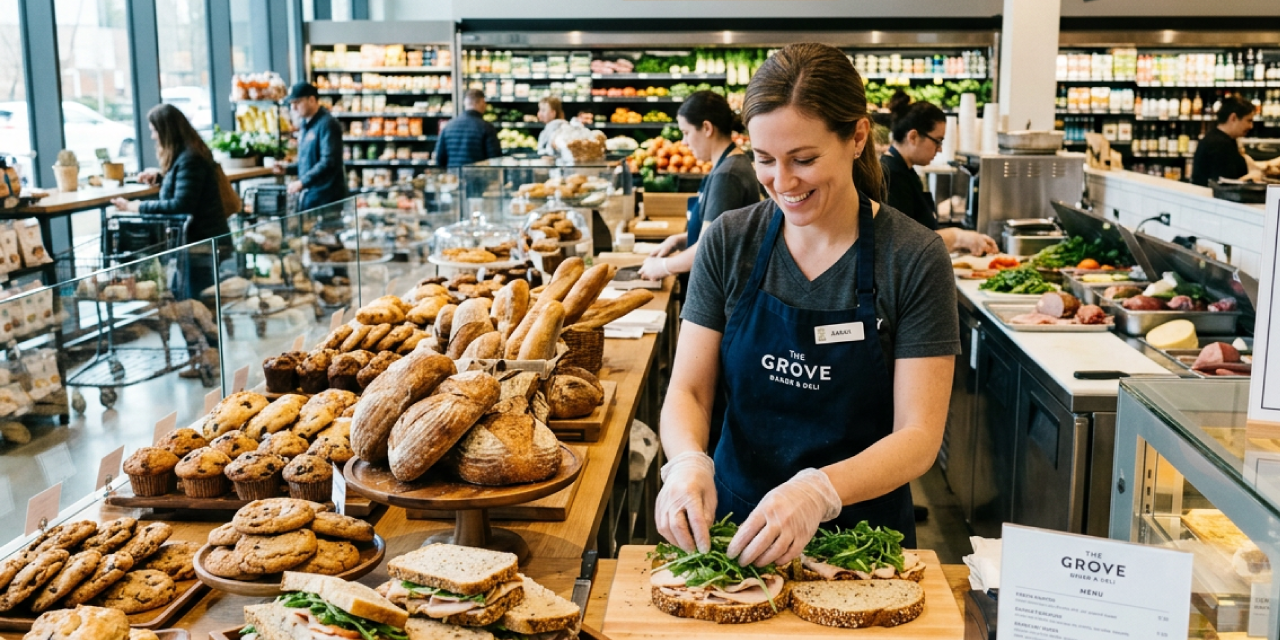
The morning starts the same way most mornings do: coffee in hand, dashboard open, trying to make sense of numbers that arrived overnight. Shrink is up in three stores. On-shelf availability dipped in produce. Labor hours are climbing again. The numbers are clear enough, but working out why they say it will take the rest of the day.
It’s a familiar picture for anyone working in grocery retail managing ordering, markdown, and in-store production. When it works, it works, and nobody complains. When it doesn’t, it shows up on a report, usually from the same stores. The reasons are frustratingly hard to pin down, and tools available are not equipped to shed any light.
Fresh categories account for 40–50% of grocery sales and generate 65% of total shrink. Getting it right shows up on the P&L — and in the thirty seconds a customer spends deciding whether the produce is good enough to bring them back.
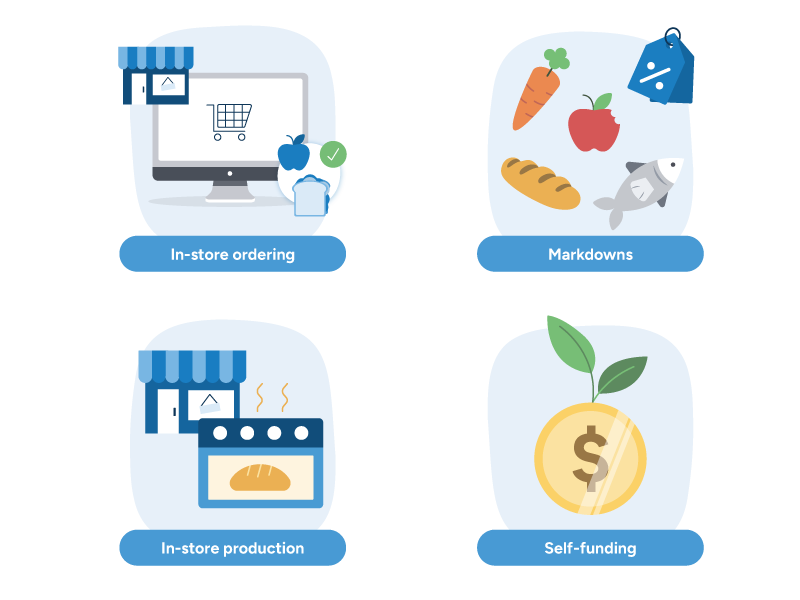
The four plays in this playbook offer software solutions for fixing the underlying problems that cause customers to shop elsewhere: inaccurate inventory, reactive markdowns, gut-feel production planning, and how each resolved issue funds the next.
1. Accurate orders start with accurate inventory
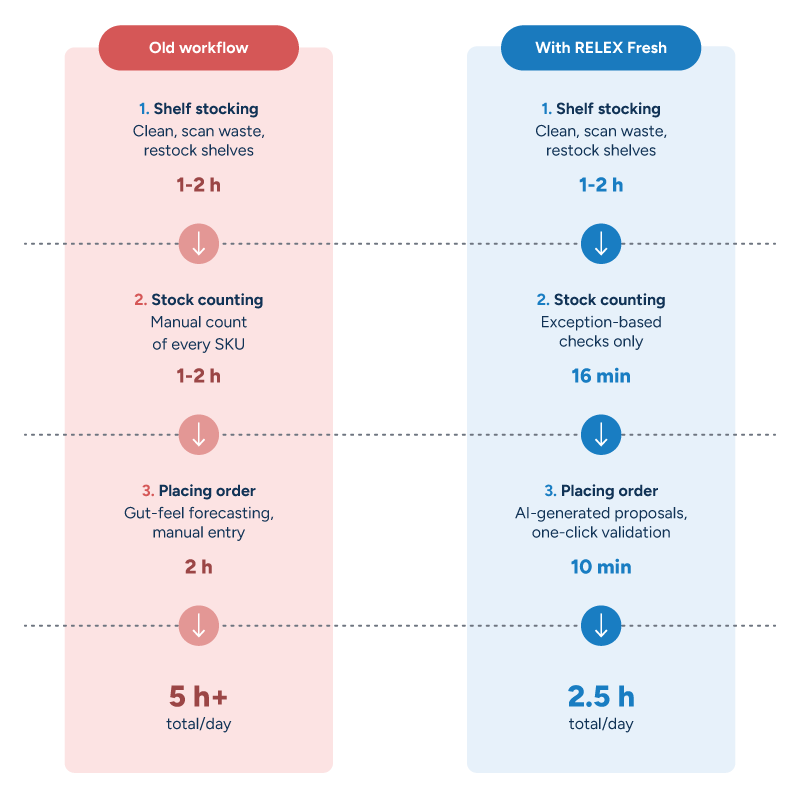
Exception-based ordering replaces the two-hour manual count with a focused five-to-ten minute exception review, covering only the items that actually need a decision.
The problem: Manual counts take hours and still produce bad numbers
The team spends so much time counting seemingly uncountable inventory, making estimates for loose fruits, bulk herbs, and other items that can’t be scanned. They know those estimates are contributing to costly spoilage, but what else are they supposed to do?
A manual count of a typical produce department can take two hours or more, every time, every store. And it is still never truly accurate. The inaccuracy cascades: a bad count drives a bad order. A bad order becomes overstock or a stockout. Overstock becomes shrink.
How it compounds
With perishables generating 65% of total store shrink, and net profit margins averaging just 1.7%, even a marginal improvement in fresh goes straight to the bottom line.
When the order is too high, produce arrives that won’t sell before it expires. It gets marked down, donated, or discarded and shows up as shrink not as a counting problem. When the order is too low, the gap on shelf is a missed sale that doesn’t surface in the data at all.
Meanwhile, the two-hour count runs again tomorrow.
The play: Exception-based ordering that flags only what needs attention
Shift from counting everything to managing exceptions.
This play requires a planning solution that reads multiple data sets, including sales data, order history, and inbound delivery schedules, and builds an estimated picture of what is likely on shelf right now without requiring a full manual count.
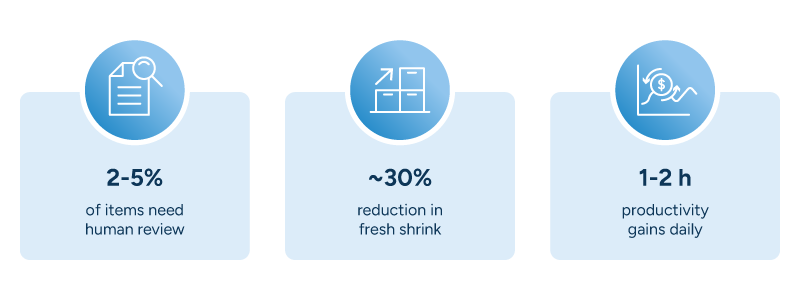
If implemented correctly, the solution would surface only the items where that picture looks wrong: the exceptions. On any given day, that’s roughly 2–5% of the range. This allows the team to review items that actually require a human decision. The other 95–98% could run automatically, all based on system recommendations.
For loose and random weight produce — areas where manual counting was never that reliable — features like AI-powered SKU matching can resolve the identification problem at the root. The right planning solution could automatically map what’s physically in the aisle to the correct record, without requiring a barcode on every item. The gap that estimation has always tried to fill would be closed before the order is placed.
The advantage: RELEX Fresh Store Ordering
RELEX Fresh Store Ordering is built specifically for the complexity of loose and random weight categories. The platform delivers accurate daily forecasts and AI-driven recommendations, guiding store teams on how much to count, order, or produce each day.
The system uses advanced algorithms to streamline replenishment for perishable categories, cutting shrink, increasing service levels, and improving shelf availability. It unifies ordering across the store, handling the entire range from packaged and barcode-based items to loose, bulk, and ingredient-level ordering for bakery, deli, and prepared foods.
Role-based analytics — guided workflows for store employees and department leads and dashboards for store directors, department managers, and regional managers — give each user the view they need. Automated ordering processes reduce manual workloads and improve staff satisfaction.
The Store Support AI agent, available through RELEX applications on mobile devices, delivers instant order explanations and troubleshooting directly to store teams. It guides users to resolution without requiring a call to headquarters or divisional offices, and builds store-level capability over time.
Key capabilities
- Reviews only the 2–5% of items that need a human decision, not 30–50% or more
- Matches loose and random weight produce to the correct record automatically, without requiring a barcode on every item
- Reduces waste in key fresh categories by 30–50%
- Improves inventory accuracy by approximately 30% versus enterprise resource planning (ERP) systems
- Runs ordering continuously and automatically, no manual trigger required
- Gives store teams real-time visibility on the floor via the RELEX mobile app
- Resolves order exceptions instantly through the Store Support AI agent, without a call to central support
2. Cut shrink with smarter markdowns
Recover margin and reduce shrink with proactive markdowns applied up to 48 hours before expiration. With intelligence gathering capabilities, it gets better each week.
The problem: Last-minute markdowns destroy margin one cart at a time
By 4pm on Thursday, there’s a cart filled with products expiring tomorrow and no good options for handling it. It’s all marked down to 50% in the hope enough of it moves. The margin hit is significant, the waste is significant, and next week the same products will be ordered in the same quantities — and the same call will have to be made again.
The typical markdown process at most grocery retailers follows the same pattern: a product approaches the end of its shelf life, so a blanket 50% discount is applied. Some of the products sell, some of them don’t, and the rest goes in the trash.
The margin hit is significant, and so is the waste. But nothing improves, because the markdown decision was made too late to matter, and the data never feeds back into what gets ordered the next day or next week.
Blanket, one-size-fits-all, last-day markdowns destroy margin and generate shrink. Produce that could have moved at 20% off two days earlier gets marked down 50% with less than one day left on the shelf. The result: maximum markdowns, minimum recovery.
This problem applies across every store department, not just for fresh. Fresh carries the highest stakes because of short shelf life, but the same logic applies to center store. A dented box of cereal, a pack of OTC pain relievers approaching end of date, and a jar of baby food all benefit from the same proactive approach.
How it compounds
Markdown decisions are made in isolation, with no connection back to what gets ordered the following week. The oversupply that caused the markdown recurs. The same products get marked down again, and the same margin is lost again.
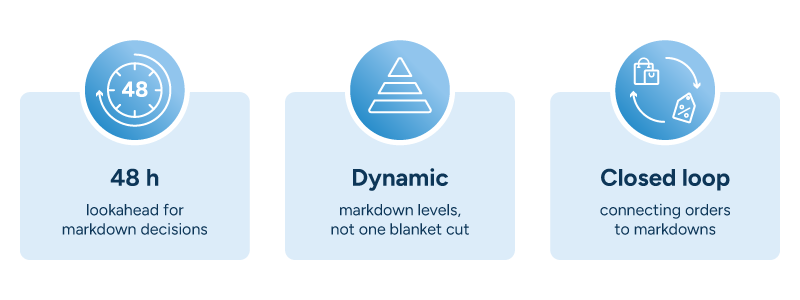
The play: A 48-hour lookahead with earlier markdowns
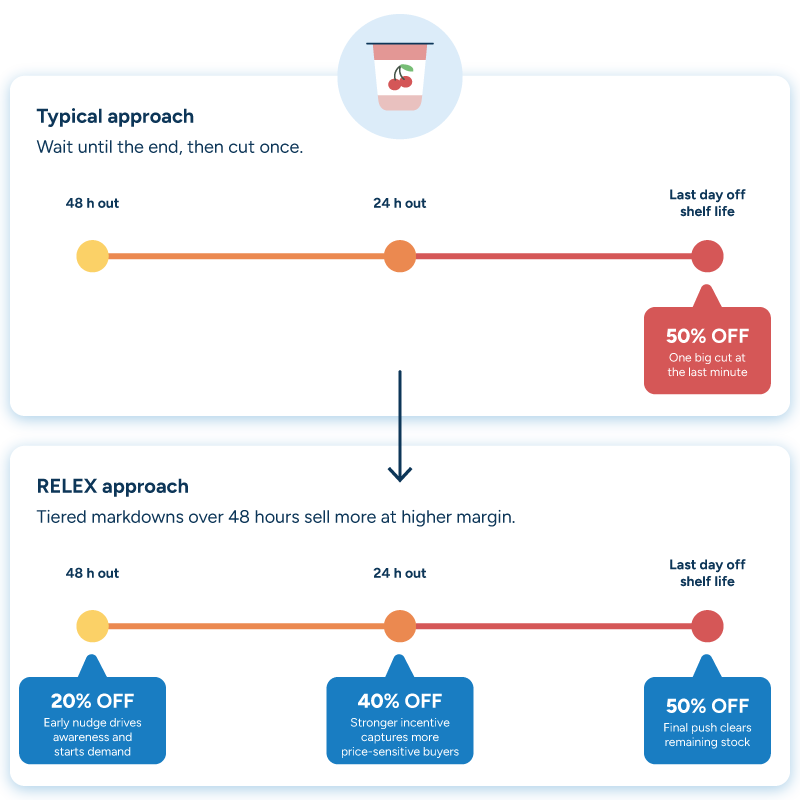
Teams should use their planning system to look ahead at projected sales, current on-shelf inventory, inbound orders, and expiration dates, and recommend markdowns while there is still time to recover margin.
That means intelligent markdowns, not blanket cuts. This requires planning software that recommends markdowns dynamically, recovering profit for the retailer while giving customers a reason to buy the product while there is still enough time to use it. The customer who picks up the 20%-off pack of salmon two days before its use-by date has a better outcome than the one who finds it 50% off on the last day, and the retailer has made more margin on the same product.
The scope of this logic is consistent across all store categories, from wall to wall. Fresh carries the most urgency because shelf life is measured in days, not weeks or even months. But the same 48-hour approach works for center store slow-movers, health and beauty lines approaching expiration, and any product category where a sell-by date is a real constraint on recovery.
Worth noting: Proactive markdowns benefit both customers and retailers. A discount applied 48 hours before expiration gives shoppers time to use the product, rather than discovering it at the end of its shelf life when they may not have time. Retailers who apply markdowns intelligently are providing value at the right moment and building loyalty when customers know they can depend on the store for genuine deals.
The advantage: RELEX markdowns — the loop that no competitor closes
RELEX connects markdown decisions to the ordering system so that what had to be marked down one week informs what gets ordered the next. The system learns from the oversupply that created the markdown and adjusts future orders to reduce the root cause. Over time, the markdown play reduces its own workload.
The RELEX seasonal planning solution makes markdowns and clearance manageable at scale, targeting the right products at the right time and right price. Expiration dates for on-hand inventory are automatically considered, proactively identifying stock nearing end of life and triggering the appropriate markdown or force-out recommendation.
This connection between markdown execution and ordering is what separates a system that manages symptoms from one that addresses root causes.
Key capabilities
- Looks ahead 48 hours at projected sales, inventory, inbound orders, and expiration dates to recommend markdowns while margin can still be recovered
- Recommends markdowns dynamically, not as a blanket single cut
- Feeds every markdown decision back into the ordering model, improving future orders and closing the loop
- Applies consistent logic across all store categories, not limited to fresh departments
- Identifies stock nearing expiration automatically and triggers proactive force-out recommendations
3. Make what customers actually buy
Demand-driven production plans, built per store and updated for real constraints, replace the intuition and precedent that drive many bakery and deli operations.
The problem: Production planning runs on memory, not data
The bakery plan was built on last Saturday’s numbers. Nobody accounted for the oven running at half capacity, or the fact that it’s a holiday weekend. By mid-morning, the trays are empty and there’s nothing left to put out. Somewhere upstream, the same amount was planned for next week too.
Bakery and deli production planning often runs on memory. “Last Saturday I made X bagels, so I’ll make X again this Saturday.” That’s the mental model many department managers work from, and most of the time it’s been close enough to get by. But “close enough” means persistent overproduction on slow days and persistent underproduction when demand spikes.
The problem magnifies because production decisions must be made hours before the sales window they’re meant to serve. Thawing for the morning run starts the day before. Ingredients need to be staged before the store opens. Bread needs to be in the oven early enough to serve the morning rush, and chocolate chip cookies need to be ready for the afternoon rush.
If the plan is wrong, you find out when customers are already in the store, and there’s no quick fix. You either scramble or you miss the sale.
How it compounds
Overproduction wastes ingredients and labor. Underproduction wastes revenue and erodes customer trust, as customers who came in expecting fresh product found empty trays. Neither outcome is visible in a single line in the P&L statement, but both show up in margin and in footfall over time.
When equipment constraints enter the picture, the problem gets worse. An oven running at reduced capacity, a member of staff unavailable for a production shift, and a delivery that arrives late can all disrupt the plan. Most stores manage it by feel, which means the results vary by manager, by day, and by store.
The play: Demand-driven plans that account for equipment, staff, and intraday timing
Replace the mental model with a real demand-driven production plan. This requires a planning system that reads actual sales forecasts, intraday demand patterns by time of day, available ingredients and finished-goods inventory, and real equipment and staffing constraints. That allows teams to build a production plan from these varied data sources, not just last week’s numbers.
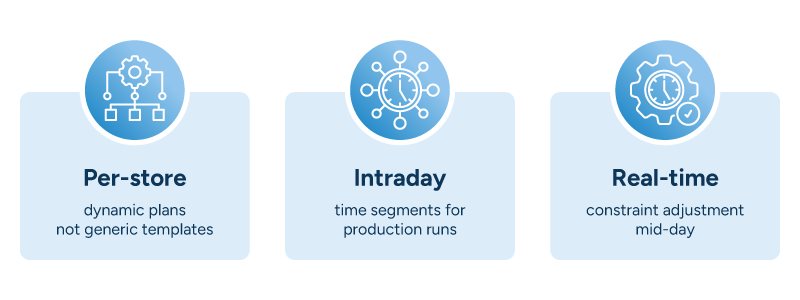
These plans should be generated per store, not applied as chain-wide templates. A store with an oven running at reduced capacity should get a different plan from one running at full throughput. A store with a smaller deli team on Tuesday morning should get a different guide than the same store on Saturday. The plan should ultimately reflect the store it’s built for.
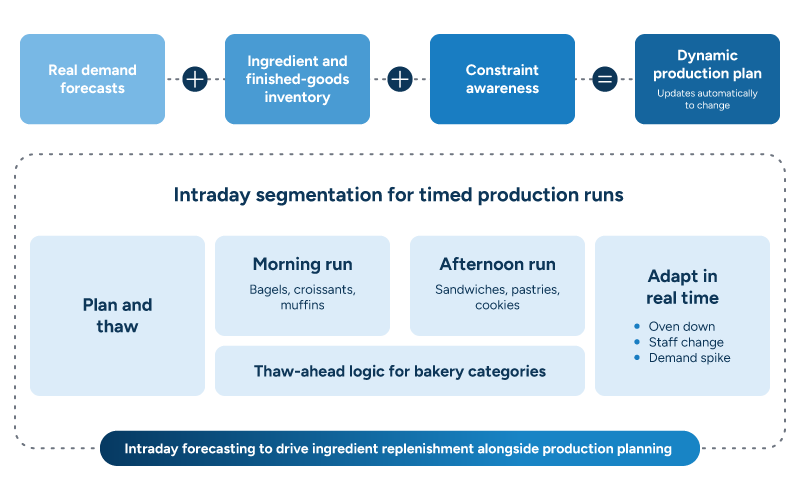
With this play, multiple production windows are covered in a single plan: the morning run, the afternoon run, thawing cycles, and ingredient preparation all planned the day before. The bakery manager wouldn’t just plan what to make today. The system would guide them through the full sequence of steps, in the right order, with the right quantities, based on what customers will actually buy.
Intraday forecasting should extend to ingredients as well as finished goods. Bills of materials (BOM) and intraday demand signals should drive ingredient replenishment alongside production planning. That way, the system covers both sides of the equation: what to make and what to have on hand to make it.
The advantage: RELEX In-Store Production Planning
RELEX In-Store Production Planning generates dynamic, per-store plans that automatically adjust to real constraints. If an oven isn’t working or the plan updates, there is no manual recalculation, no gut-feel adjustment, no manager scrambling to replan. The system knows what’s available and builds around it.
Per-store plans mean local demand is actually reflected in what gets produced, rather than being overridden by a generic template written for a different store profile. That specificity reduces overproduction waste and cuts the reactive scramble when output doesn’t match demand.
RELEX delivers accurate daily forecasts and AI-driven trading recommendations for fresh and ultra-fresh categories. Store teams get in-store production plans that reflect actual demand, actual constraints, and actual store conditions with the guidance to act on them.
Key capabilities
- Generates per-store dynamic production plans based on real demand forecasts, not last week’s numbers
- Adapts automatically if equipment or staffing changes mid-day
- Covers morning and afternoon production runs with intraday time segmentation
- Forecasts ingredient needs and drives replenishment using bills of materials
- Plans thaw-ahead cycles for bakery categories
- Guides production planning for meat, seafood, bakery, deli, and prepared foods with AI-assisted recommendations
4. Pilot and prove value one play at a time
Fresh transformation doesn’t have to be a leap of faith. Each play proves its value before the next one starts, creating a self-funding sequence that reduces both capital commitment and risk at every stage.
The problem: Transformation feels like a big upfront commitment
The Fresh Start Program kicked off in January. By June, half the stores are live, and the other half are waiting on an IT dependency nobody flagged in scoping. The ROI that was promised in Q2 is now penciled in for Q4 — maybe. It’s starting to feel like every other large technology project the business has ever run.
A multi-play fresh transformation can look like a significant commitment before the first result is in. Budget cycles, IT resource, and change management across dozens or hundreds of stores are real blockers for retailers who have seen large technology programs take years to deliver value.
Think about an ERP implementation. Putting a major enterprise system into place can take three to four years before benefits materialize. The capital is committed upfront, and the return is deferred. But if things go wrong, there’s no off-ramp.
The play: Pilot first and prove value, then, use the savings to fund the next
Instead, use a pilot model designed to prove value quickly.
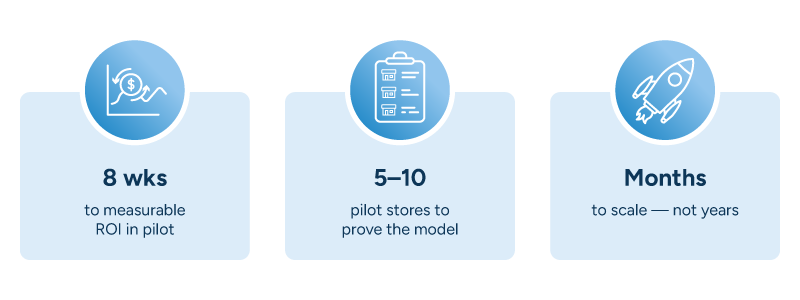
Start by piloting one play across eight weeks, in five to ten stores. Shrink reduction, labor savings, and improvement in on-shelf availability are measurable within that window. The results from a small pilot are representative of what scales across the entire chain and they give you the numbers to make the business case for the next play before committing to it.
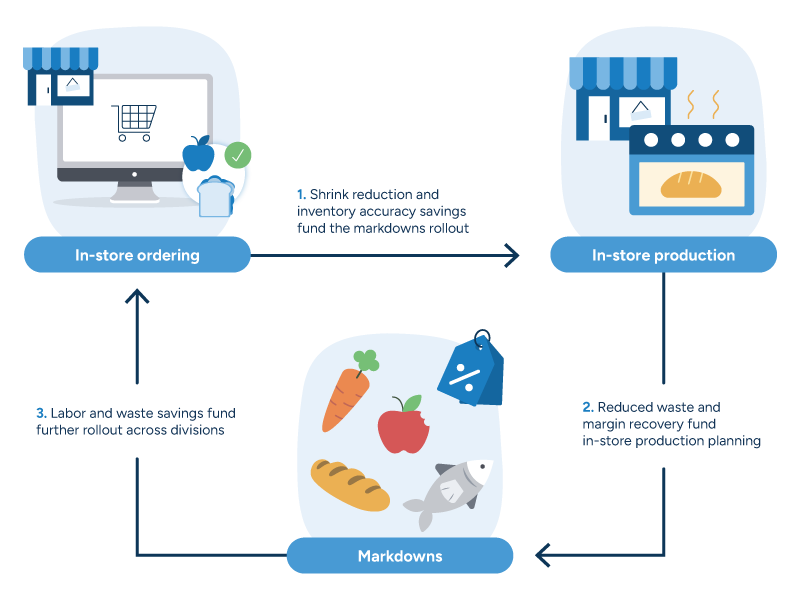
Use those savings to fund the next play. Each step is designed to be self-funding. For example, the ROI from Fresh Store Ordering would pay for Markdowns. The margin recovered from Markdowns would fund In-Store Production. Without a single large capital commitment, the transformation pays for itself as it scales.
The recommended sequence:
- Fresh Store Ordering: Immediate labor savings and inventory accuracy gains, visible within the pilot window.
- Markdowns: Often running alongside ordering, once the inventory data is reliable.
- In-Store Production : Once ordering and markdown patterns are established.
Again, this sequence is a recommendation, not a rule. Some retailers start with markdowns because that’s where the margin is bleeding. Others start with in-store production because fresh food preparation has become a competitive battleground. With RELEX, you start based on where your pressure is highest. That’s a different answer than you’ll get from a generic framework.
For existing RELEX customers adding fresh store capabilities, the timeline is even shorter. Much of the data integration work is already done. A pilot can start faster, and the initial ramp-up to reliable results is compressed.
The advantage: One platform means each new play activates faster than the last
Because it’s one connected platform, each new play activates faster than the last. There’s no re-implementation, no separate vendor to onboard, and no new data integration project. The investment in the foundation compounds.
A retailer with 50 stores could scale from pilot to full chain in a matter of months. A retailer with 2,000 stores rolling out division by division might realistically achieve full deployment of a solution in approximately one year.
The AI models get smarter over time as well. More data, history, and patterns mean the machine learning models continue to improve. Each performance gain becomes the starting point for the next improvement. The S-curve of transformation repeats: the slope goes up sharply with each implementation, and the next play starts with a new improvement curve from that higher level.
When the data connects, the margin follows
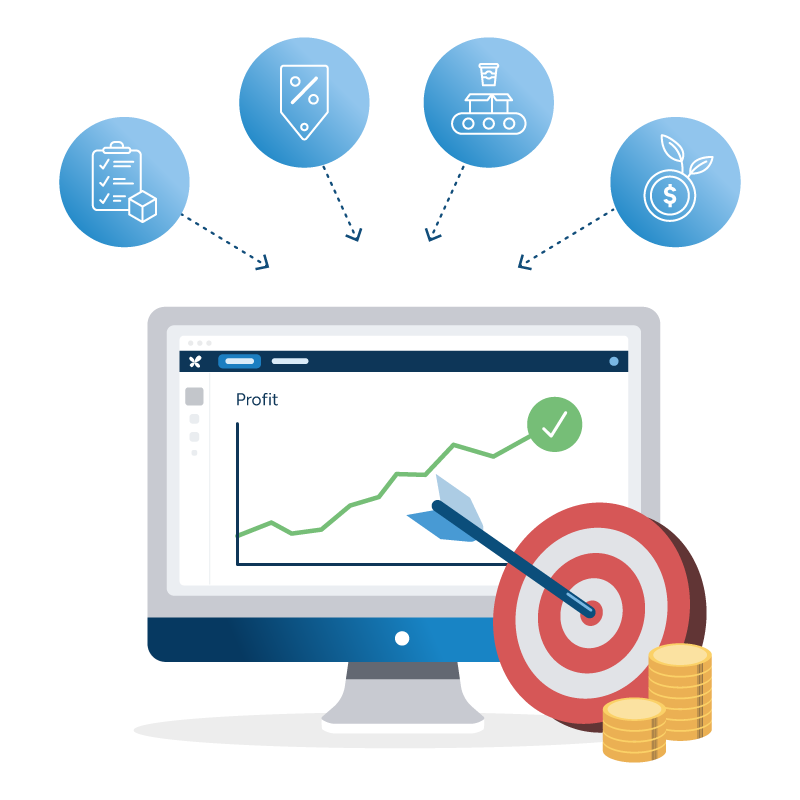
Treating each issue in isolation only increases the likelihood that they persist and evolve. The day-to-day pressures are familiar enough: labor costs, food waste, inaccurate ordering.
Upstream supply uncertainty, geopolitical shifts, and the market volatility and import tariffs have already reshaped the cost of fresh goods in recent years. It’s only a matter of time before these seemingly isolated issues become a lot harder to resolve, especially when the root causes may not be obvious.
RELEX provides a single unified platform that oversees all aspects of your fresh store operations. Every play connects into one loop, every root cause becomes visible, and every store gets a plan built for its own demand, constraints, and conditions.
Your four plays to take away:
- Replace manual counts with exception-based ordering that flags only what needs a decision
- Recover margin with proactive markdowns applied before it’s too late to matter
- Build production plans from real demand data, not last week’s numbers
- Pilot one play, prove the value, and fund the next from the savings it generates
Your customers are already shopping smarter, and fresh is where they go first. A well-run store operation shows up in your results, and when a customer comes in and gets what they came for, they come back. Not just for the goods, but for the experience of a store that gets it right.
None of this is news. The problems you have read in this playbook are ones you’ve been managing for years. The next step is to start a conversation where RELEX can show you exactly how we can have the most impact.
Written by