
The Challenge of Scale Without Structure
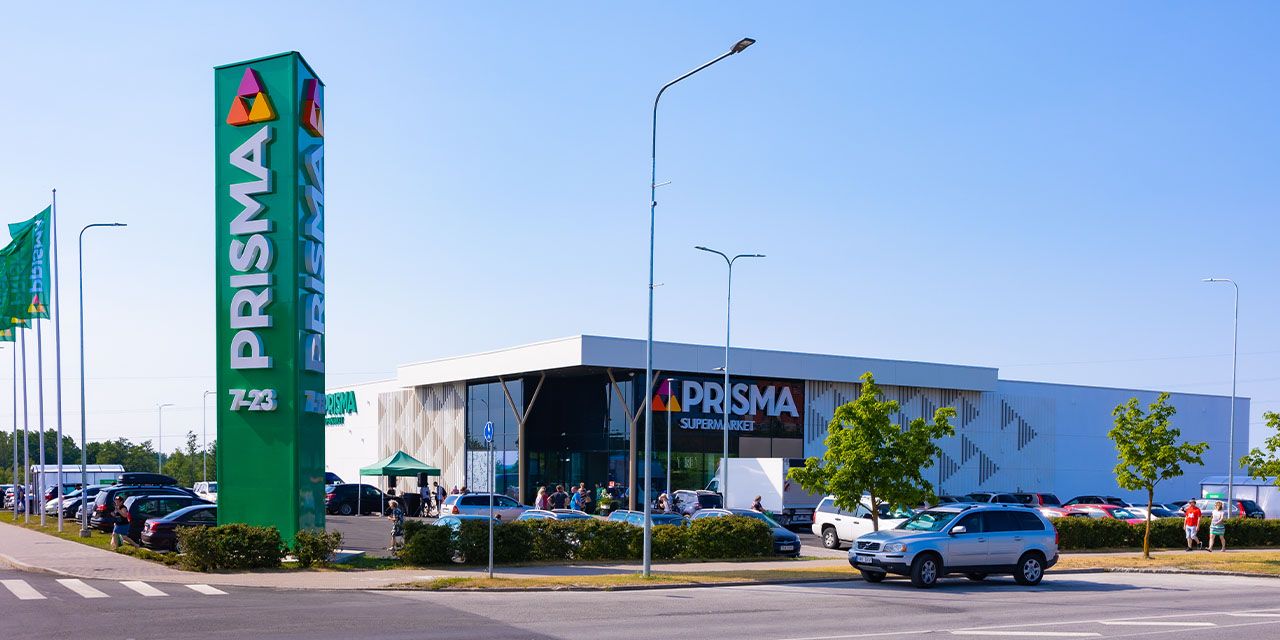
Prisma Peremarket is a retail company operating in Estonia and a subsidiary of S-Group, Finland’s largest grocery retailer. They operate hypermarket stores with groceries and general merchandise, alongside a large online grocery platform. With this retail format, any inefficiencies are amplified due to thousands of product-location combinations, which can affect availability, efficiency, and increase waste.
Prisma Peremarket identified three primary areas where operational friction was limiting their ability to deliver consistent customer experience:
- Replenishment fragmentation
- Fresh category management
- Space planning
Replenishment responsibility was distributed across stores, purchasing and multiple other departments, creating inconsistency and significant manual workload. Order lines were generated in high volumes but manually. There was constant intervention, which consumed staff time and generated more ordering activity than was necessary.
In fresh categories, they experienced demand swings between weekdays and weekends, and the static, history-based order parameters could not adapt quickly enough. They had busy weekends, so fresh meat, fish and ready meals, categories with shelf-lives as short as five days, were all running low by Sunday evening and Monday morning. Over-ordering earlier in the week, when shopper traffic was lower, increased the risk of waste.
Centralization, Automation and Fresh Optimization
Prisma Peremarket began its RELEX journey in 2019 implementing forecasting and replenishment, including fresh optimization and after having the foundation in place later expanded into capacity optimization. They centralized ordering into a dedicated replenishment team which turned the multi-department structure into a single team accountable for replenishment across all categories. This was done to standardize processes, raise automation levels, and track performance against clear KPIs.
Prisma Peremarket introduced a simplified, risk-stratified logic for managing its diverse product portfolio. Rather than applying a single replenishment methodology across up to 80,000 SKUs, they divided the assortment by spoilage risk. Products with a shelf life of 21 days or fewer are managed using fresh adaptive order parameters, which recalculated forecasts daily on a forward-looking basis and balanced incoming volumes against wastage risk. This means that products arrive as close as possible to the moment of purchase, with shelf space playing a minimal role in constraining order quantities.
Consolidation and automation reduced total order lines by more than 20%, while also reducing order frequency by 7%. Replenishment automation, measured as RELEX order lines sent without changes, reached 88% in December 2025, up from a much lower baseline of 55% in July 2022. Prisma Peremarket’s 10,000-square-meter hypermarkets require staff to manually pick and transport products from backroom storage to shelves for each delivery line, and improvements in order lines have directly driven efficiency gains and labor savings over the past four years.
In fresh categories, the impact of adaptive order parameters has been substantial. For fresh meat, fish, and ready meals, shelf availability reached 95.4% by December 2025, including a reduction in food waste. Prisma Peremarket also expanded its fresh assortment in these categories by approximately 10% during the same period, adding SKUs without increasing complexity or sacrificing efficiency gains.
Planograms as a Planning Foundation
Prisma Peremarket adopted a phased approach, expanding to implement space planning and space-aware replenishment. Previously managed through a legacy, standalone system using group-level sales averages, space allocation lacked store-level demand visibility, preventing replenishment from optimizing orders based on actual shelf capacity.
Prisma Peremarket shifted to store-level planograms, generating individual planograms for each store rather than applying cluster averages. In addition, they are actively evaluating both cluster-derived and block-based store-level approaches to determine which methodology best suits each category.
For dry goods and longer-shelf-life categories, delivery flow smoothing consolidates incoming volumes to lower-traffic days, reducing the number of separate delivery events. Space-aware replenishment uses store-specific planogram data to determine how much shelf capacity exists for each product in each location, then uses that information to set maximum order parameters, filling available space up to a defined inventory turnover threshold rather than ordering to a fixed calendar cycle.
By unifying space and supply chain, Prisma Peremarket has realized additional benefits through reduced order frequency for dry goods. In vinegars and oils, delivery lines decreased by 8%, and in the Tex-Mex category, the reduction reached 17%. These results were achieved within the first few months following the September 2025 roll-out, establishing a strong foundation for expanding space-aware replenishment to additional categories in 2026.
“The deeper structural shift was putting space in the driving seat of replenishment.” said Juri Ljaskin, VP – Supply Chain Management, Store Process Development, Sustainability, Prisma Peremarket. “Once shelf capacity informed the maximum order parameter which is grounded in accurate, store-specific planogram data, the system could reduce delivery frequency without sacrificing availability. We will build on this strong foundation with assortment planning, connecting every layer of supply chain decision-making into a single, continuously improving system.”
Prisma Peremarket intends to go live with RELEX assortment planning in spring 2026. They also continue to expand adaptive order parameters into additional fresh subcategories, refine the space-aware replenishment rollout, and explore further enhancements to planogram automation. Prisma Peremarket has successfully unified replenishment, space, and store execution into one system capable of managing the full complexity of large-format grocery retail, with each step building momentum and delivering results that justify further investment.”