Agentic AI in manufacturing supply chain planning
Sep 24, 2026 • 10 min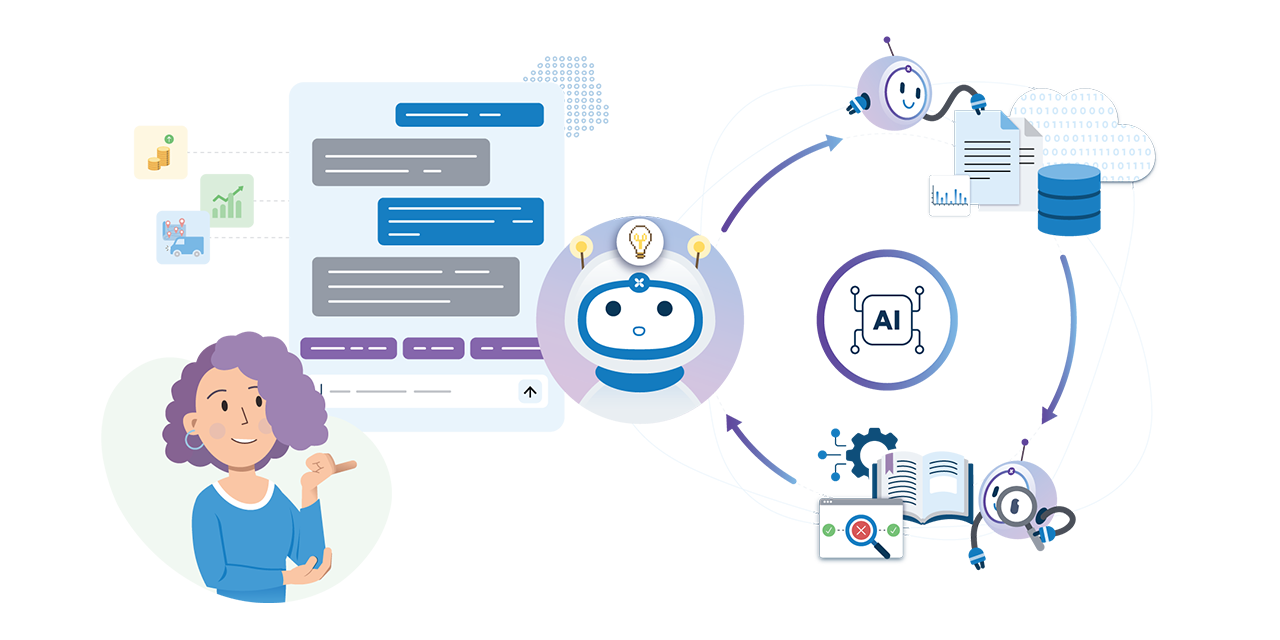
Manufacturing supply chain planning has become more difficult with increasing disruption, demand fragmentation, and shifting trade policies. To cope with so much turbulence and change, manufacturers are increasingly interested in what AI can do. The RELEX Solutions 2026 State of the Supply Chain survey found that 32% of respondents were actively investing and scaling AI already, while 67% say they have increased confidence in AI for supply chain decision making compared to the previous year.
One of the most promising types of AI for manufacturing is agentic AI, which builds on generative and other forms of AI to create autonomous tools that can reason through challenges and execute tasks on their own. But this newer, more independent AI technology only provides manufacturers with needed functionality if it’s applied correctly. Successful manufacturers make use of both off-the-shelf convenience of general agents, as well as the unlimited adaptability of tailored agents .
Effective agentic AI requires a proven planning foundation
Agents must understand the planning context in which they operate. That context includes master data, planning logic, constraints, workflows, business rules, decision rights, and the customer-specific definitions of what “good” looks like.
Without this foundation, agents may be impressive in conversation but unreliable in execution. And trust, explainability, and control are essential in supply chain planning.
Agentic AI should be built on top of a proven planning foundation, not beside it or disconnected from it. RELEX already provides this foundation through AI-driven planning, deep domain logic, and specialized optimization, machine learning, and heuristic capabilities across demand and supply planning. RELEX helps more than 600 customers automate day-to-day planning work and create measurable business value.
Agentic AI is the next layer: making this automation more interactive, proactive, and easier for planners to use in their daily decision-making.
Why most manufacturers need general agents and tailored agents
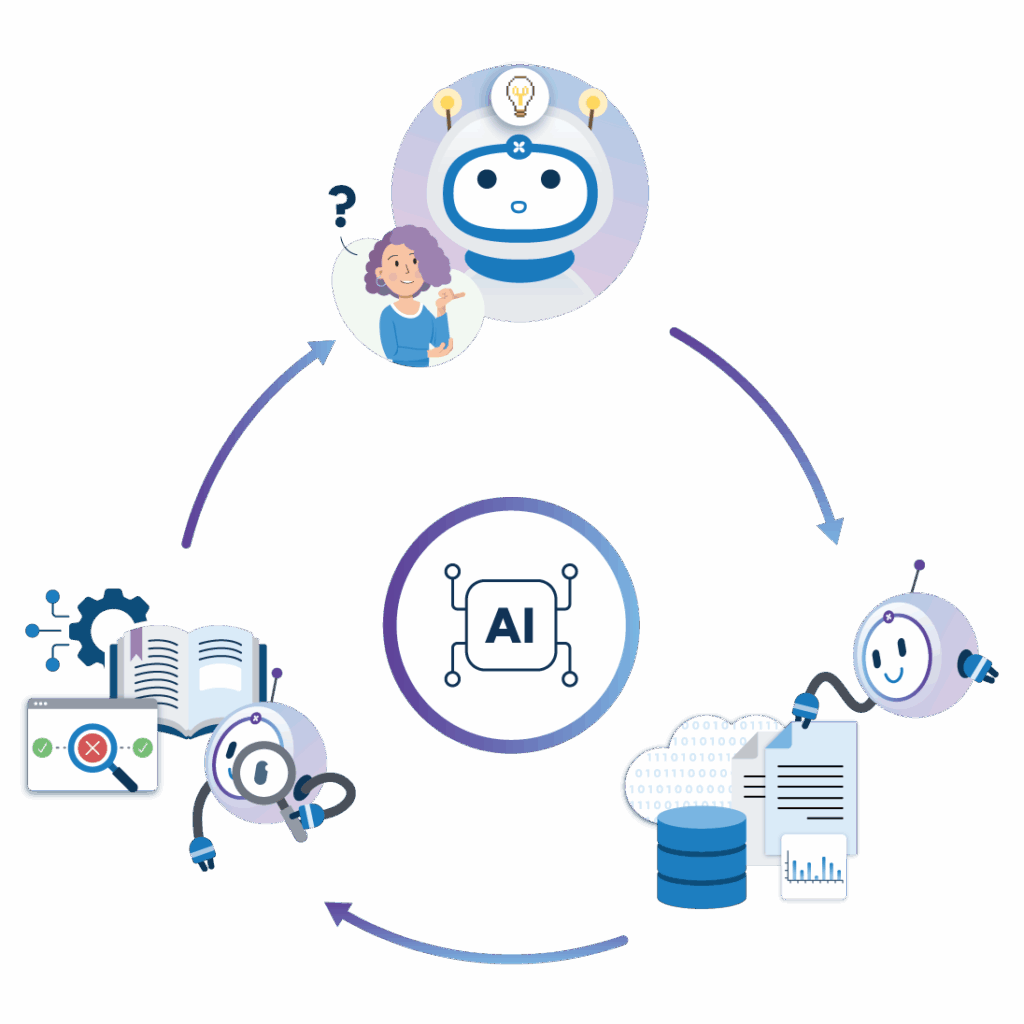
When it comes to types of agents, most can be sorted into either general agents (also called “productized agents”) or tailored agents (often also called “customer-specific agents”).
One isn’t necessarily better than the other. In fact, manufacturers need both types to thrive.
General agents for common tasks like forecast review
General agents are the off-the-shelf agents that help manufacturers with the common planning tasks that most manufacturing brands need.
In this category, you’ll find your repeatable planning patterns that appear across many customers, like forecast review, troubleshooting, stress-testing, and constraint analysis. These agents should be ready to deploy instantly. They should be built on best-practice planning logic and designed to deliver value quickly without heavy customization.
Tailored agents for planning work unique to your business
Tailored agents handle the “long tail” of planning that cannot be fully covered by a fixed menu of general agents. These agents are suitable when manufacturers require greater adaptability, such as systems where planning processes, workflows, definitions, data sources, or decision rights differ from one business to another. Customers need the flexibility to create tailored agents that reflect their own planning context, business rules, and operating model.
While most agentic platforms for manufacturers take one of these approaches, RELEX combines them to give you the best of both options.
How RELEX Open combines general and tailored agents
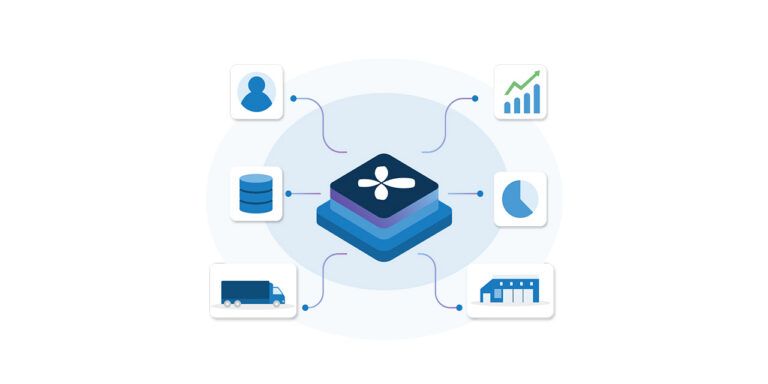
While deploying standard planning capabilities , manufacturers can use RELEX Open to connect RELEX with the rest of the enterprise, and extend the platform using tailored agents and new AI-driven workflows.
In addition to dashboards and visualizations, RELEX Open includes a dialog-based interface, called Rebot, that lets manufacturers ask complex questions, investigate issues, trigger analysis, and guide decisions in natural language. Rebot acts both as a smart planning assistant and as an orchestrator that calls on the right agents when needed.
RELEX Open combines a proven, ready-to-deploy platform with agents for repeatable planning patterns along with an extensible foundation for the particular needs of each manufacturer.
Built on RELEX’s proven, highly scalable, and configurable planning foundation, RELEX Open enables three core capabilities:
- Deploy: Get up and running quickly with a proven and scalable supply chain planning platform that includes the ability to use general agents for repeatable planning patterns.
- Connect: Integrate planning with the wider enterprise through an open integration layer using MCP and A2A to connect the planning with other systems and domains.
- Extend: Build new functionality quickly with AI-powered tools and prompting, including tailored agents for customer-specific processes, definitions, and ways of working.
Deploy the 5 core RELEX agents for manufacturing
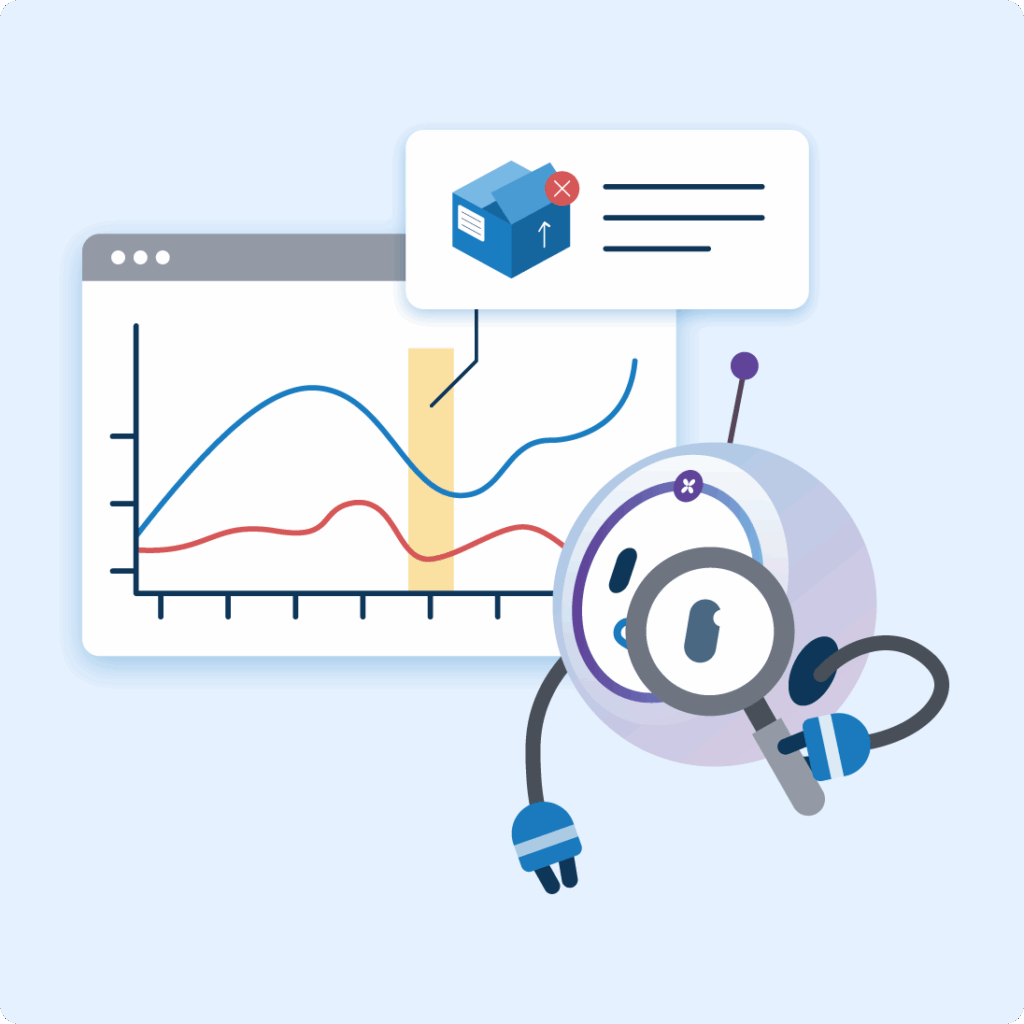
Working alongside many manufacturing companies has shown us at RELEX that some problems show up again and again. The biggest opportunities for further streamlining day-to-day production planning lie in reviewing plans, troubleshooting issues, simulating alternatives, diagnosing problems, and identifying improvement potential.
These repetitive, high-value patterns are identified and solved with five productized, easy-to-deploy agents. The agents are focused on repetitive, core demand and supply planning areas that appear consistently across customers.
| RELEX agent | Manufacturing challenge | What the RELEX agent does |
|---|---|---|
| Forecast Review agent | Some situations require review time and planner expertise, even with a highly automated, ML-driven forecasting process. | Automates forecast reviews and delivers a concise summary highlighting items that require attention. Escalates to the Forecast Troubleshooting agent when deeper investigation is needed. |
| Forecast Troubleshooting agent | Understanding why some forecasts look unexpected is time-consuming. Planners must investigate data inputs, model behavior, and recent changes, which slows down the review cycle. | Gathers relevant data, diagnoses forecast issues, and applies corrective actions when authorized by the planner. Summarizes findings and recommendations to accelerate resolution. |
| Stress-Testing agent | Planner must steer the planning system in the face of uncertainty. Important decisions should be made against a range of possible futures, not just the most likely plan, but performing this analysis manually is time-consuming. | Runs instant scenario-based analysis to stress-test alternative demand or supply futures, helping planners understand plan confidence before making strategic decisions. – Helps planners prepare more resilient supply plans for both opportunistic and pessimistic scenarios. – Enables faster responses and better decisions, especially when market conditions change. – Supports better risk management and helps planners navigate toward higher profitability. |
| Constraint Review agent | Supply optimization models are complex, and validating whether they accurately reflect reality is difficult. When results look unexpected, the most common question is “what is constraining the plan?” Finding the answer often requires laborious manual investigation. | Analyzes the plan to identify bottlenecks that constrain execution, along with their root causes and downstream impact. The agent performs a quick analysis and lets planners explore: – Which constraints are binding – How those constraints affect the plan – What root causes planners should investigate |
| Constraint Unlock agent | While RELEX optimizes across every constraint, untangling which constraints are limiting the plan, and why, still requires deep expertise and time. | Recommends capacity adjustments to eliminate supply bottlenecks and guides planners through supporting analysis, validating changes against different futures before committing. – Detects the supply bottlenecks that prevent meeting demand – Suggests solutions and applies them within scenarios for planner review. |
Real-world example: How the Forecasting Review Agent helped a food manufacturer resolve issues faster
These agents are live and ready to deploy, as evidenced by one RELEX customer, a large food manufacturer. The team noticed that, despite their high forecast accuracy, there were still a number of forecasting issues that might be resolvable with an agent. Planners wanted to see if they could reduce how often they had to escalate investigations.
The Forecasting Review agent was deployed and immediately got to work on these issues. The team noticed faster forecasting reviews and fewer issues that needed to be escalated to central RELEX team overall. Fewer escalations meant that issues were resolved faster and with fewer overrides.
Today, this manufacturer can get new users on the team up and running within weeks (instead of months), and existing users resolve their issues 50-70% faster, while analysis that used to be impossible has now become routine for the team.
Connect and extend to build unique AI agents for manufacturing
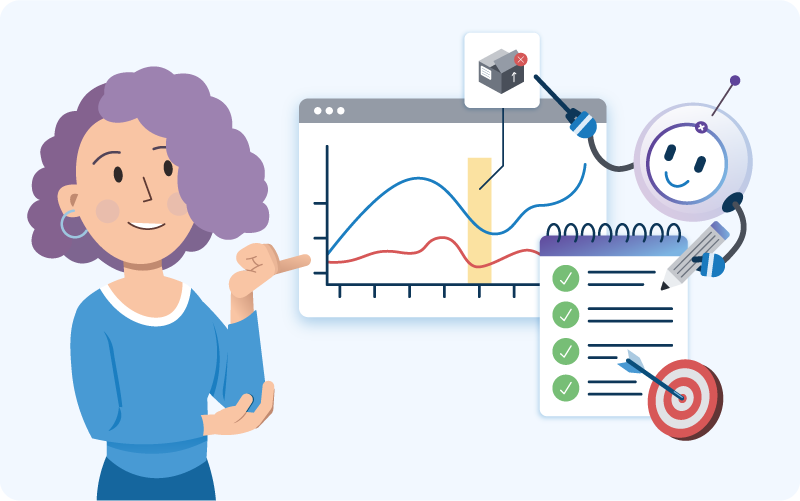
Productized agents apply broadly across customers, but RELEX has found that many agents need to be customized to customer-specific needs for optimized production planning. Planning processes vary substantially across businesses, with different systems, priorities, and definitions of “normal.” This long tail requires a platform built for fast, guided development rather than a fixed menu of options.
New capabilities, whether business logic or agentic skills, can be developed, validated, and published using prompting and AI automation without depending on a release cycle. RELEX’s Forward Deployed Engineers (FDEs), together with the RELEX Open platform, help manufacturers achieve solutions that match their needs and maximize their business success.
Connect to your existing tech stack
RELEX Open integrates seamlessly into the tools and functions your team is already using. Consider a manufacturer that regularly receives late delivery notifications by email from its suppliers. Manually transferring that information into ERP and planning systems takes time, delays replanning, and slows decision-making.
Instead, the customer could connect their emails to RELEX so the platform can automatically capture the right information in the right planning context. RELEX can then apply it to the plan, analyze alternatives, and recommend what to do next.
Extend the functionality with tailored agents
Once deployed and connected, a manufacturer can build what they need on top of the platform. For example, consider a supply planner who always runs a Monday morning review that analyzes the plan against demand, identifies possible gaps, and evaluates the next-best alternatives for meeting expected demand.
This multistep review process can make use of general agents, but may also require additional agentic capabilities adapted to the customer’s process. RELEX Open lets them build exactly what they need to make the Monday morning review process effortless and automated.
Getting started with RELEX agentic AI for manufacturing
Every manufacturer’s path to AI looks different. RELEX’s approach to AI is to allow every customer to progress at their own pace and not to force one pace or one shape on everyone. RELEX gives customers a proven foundation for end-to-end supply chain planning and quick ROI, complemented by agentic tools that are easy to deploy, connect, and extend. This helps customers start realizing business value from day one while creating a path toward further automation and innovation.
Now manufacturers can invest in the proven foundation and agents for repeatable planning patterns, then build tailored agents and new capabilities quickly on the same open platform.
AI agents for manufacturing FAQ
What is agentic AI?
Agentic AI is a term for autonomous systems capable of complex, multistep planning that act on a user’s behalf. Powered by large language models (LLMs), agents can process and communicate like a generative AI chatbot, but rather than simply answering a question, agents can go a step further by executing actions.
What makes agentic AI different for manufacturing versus other industries?
Manufacturing planning involves complexity that doesn’t show up the same way elsewhere: multi-stage production, capacity and material constraints, supplier lead times, and demand-supply interdependencies that ripple across a network. An agent working in this environment can’t just reason generally about “the business.” It needs to understand the planner’s actual context, including master data, planning logic, workflows, business rules, and decision rights.
That’s why agentic AI for manufacturing has to be built on a proven planning foundation rather than bolted on separately. Without that grounding, an agent might sound convincing but produce recommendations that don’t hold up against real production constraints, which is why trust and explainability matter more here than in lower-stakes business functions.
What production planning tasks are best suited for agentic AI?
The best fit tends to be work that’s repetitive, time-consuming, and requires pulling together multiple sources before a planner can act. Forecast review is a good example: even with strong ML-driven forecasting, someone still has to check flagged items and decide what needs attention. Troubleshooting unexpected forecast results is another, since it usually means digging through sales history, model behavior, and recent changes just to understand what happened. Scenario planning and stress-testing also fits well, since manually running a range of possible futures for every major decision doesn’t scale, but an agent can do it instantly.
The same applies to figuring out what’s constraining a plan: the question “why is this happening” comes up constantly, and it’s often a slow manual investigation to answer. These patterns show up across manufacturers regardless of industry, which is what makes them good candidates for general, ready-to-deploy agents rather than custom builds.
What's the difference between off-the-shelf and custom-built AI agents for manufacturing?
Off-the-shelf agents (sometimes called general or productized agents) are built to solve problems that are common across most manufacturers, like reviewing forecasts or analyzing constraints. They’re designed to work with minimal setup and deliver value quickly, since the underlying planning pattern doesn’t vary much from one company to the next.
Custom-built (or “tailored”) agents exist for everything else: the processes, definitions, and decision rights that are specific to how one company operates. No fixed menu of standard agents can cover that long tail, so manufacturers need a way to build tailored agents that reflect their own planning context. Most manufacturers end up needing both. The off-the-shelf agents handle the common ground, while custom agents handle what makes their operation different.
Should manufacturers build or buy their agentic AI solutions?
Manufacturers share some common agent requirements, but each also has unique considerations shaped by industry, constraints and production type. RELEX addresses both sides: manufacturers can buy an off-the-shelf agent for quick deployment, then build additional agents to handle the tasks that fall outside what any packaged solution covers.
How do manufacturers decide where to start with agentic AI?
Most start with the planning patterns that are common, low-risk, and don’t require heavy customization, since that’s where value shows up fastest without disrupting existing workflows. From there, manufacturers can expand at their own pace rather than being forced into a single roadmap. As trust in the agents grows and specific gaps in the standard tools become clear, it makes sense to move into more tailored capabilities that reflect the company’s own processes and decision rules. The starting point matters less than having room to grow. A rigid, one-size-fits-all rollout tends to stall, while a flexible one lets manufacturers build toward more automation as they’re ready for it.
What risks should manufacturers consider before adopting agentic AI?
The biggest risk is deploying an agent that sounds capable in conversation but wasn’t built with enough visibility into the actual planning context. Without access to master data, planning logic, business rules, and decision rights, an agent can produce recommendations that seem reasonable on the surface. But these recommendations don’t hold up once applied to real constraints. That’s a bigger problem in manufacturing than in lower-stakes settings, since a bad recommendation can affect capacity utilization, delivery timelines, or trigger costly downstream corrections.
This is why transparency and explainability matter as much as the agent’s underlying sophistication. Manufacturers should look for agents that operate within clear boundaries, rather than agents that act as an unaccountable black box. The best manufacturing agents explain their reasoning and leave room for human review on higher-stakes decisions.
Written by

Related Articles

How to build a consumer decision tree: why the best CDTs start with shopper behavior, not supply logic
See why CDTs based on shopper behavior beat vendor- and workshop-built trees, and how RELEX CDT Builder applies the method.

Case Study: Grupo Vinoteca
See how Grupo Vinoteca, a Mexican wine and spirits distributor, reduced lost sales by 34.7%, cut store replenishment time by around 50%, and saved on inventory with RELEX's unified planning.
Make AI work at scale.
This session works through what leading retailers and manufacturers are doing instead: deciding what to own, what to buy, and how to make the two work together. You'll see it working through examples drawn from real deployments, not a vision deck.