Store operations: The execution gap costing retailers
Aug 24, 2026 • 8 min
Retailers have spent a decade transforming their supply chains. And it’s worked: Forecasting is sharper, replenishment is more automated, and DC operations are leaner.
But while availability metrics and inventory turnover rates reflect significant improvement for supply chains, the store itself hasn’t kept pace. The decisions happening dozens of times a day, particularly in fresh departments, are still made by individuals working from incomplete information, habit, and instinct.
The gap between supply chain optimization and store-level execution in fresh departments is the last major unsolved margin problem in grocery retail. Fresh generates 65% of store-level shrink while representing 40–50% of sales. A modest shrink reduction has an outsized bottom-line impact for retailers. The longer this gap goes unaddressed, the greater the margin erosion.
What the store operations execution gap looks like
For many retailers, fresh ordering still depends on manual counts that take hours and still produce unreliable numbers. Without the time to count every single item in loose produce and bulk items, counts for these products often get estimated, and those estimates drive orders. When orders are based on estimates, there is a much higher likelihood of under- or overordering, increasing stockouts and waste.
Meanwhile, production planning in the bakery and deli mostly runs on precedent. Both departments plan their production based on what was made on a comparable day and make slight adjustments based on experience and feel. This production planning style creates persistent over-production on slow days and empty shelves when demand spikes. It’s not exact enough, which ends up costing the retailer in sales and long-term customer loyalty.
Another part of the gap is the reactive timing of markdowns. Usually, by the time a discount is applied, the window for recovering meaningful margin has already closed. So instead of using markdowns to recoup profits, retailers find their markdowns reduced to a way to minimize losses.

How overrides fuel the store execution gap
And then, there’s the biggest issue of all: Overrides.
Store teams override system-generated order proposals regularly, adding considerable manual work that takes time. The problem is that currently many retail employees override for good reasons.
These overrides often come from three root causes: bad data, confused incentives, and unearned trust.
Lack of data integrity erodes trust
Bad data (or badly managed data) creates phantom inventory (stock the system thinks is on-hand but quite clearly isn’t), which corrupts the input the proposal is built on and erodes the trust in the system. When you combine phantom inventory with potentially stale planograms and outdated assumptions, store staff have every reason to distrust the proposals. The data fueling the proposals is often wrong.
KPIs incentivize waste
When a team member is (correctly) looking to optimize for a metric store success is specifically measured on, they’ll often override the proposal (and understandably so). Traditionally, store KPIs punish stockouts far more visibly than they punish spoilage and waste. Therefore, staff tend to default to over-ordering just in case.
Poor past experiences create skepticism
The third root cause is trust and adoption. Local knowledge (“we’ve always done it this way!”), skepticism earned from poorly executed changes in the past or poor customer feedback, and an increasingly tech-savvy frontline workforce often leads to disengagement from existing clunky, outdated and error prone existing systems.
These types of overrides all make sense, but that doesn’t mean that the overrides are inevitable. With better data, better alignment on KPIs, and some earned trust, retailers can eliminate the need for excessive overrides.
Why high turnover destroys store operations efficiency
From talking to RELEX customers, we know that fresh departments run at some of the highest turnover in retail stores. Building real ordering competency in fresh without structured tools takes six to twelve months. And the sad truth is that many employees leave their position before they get to that point.
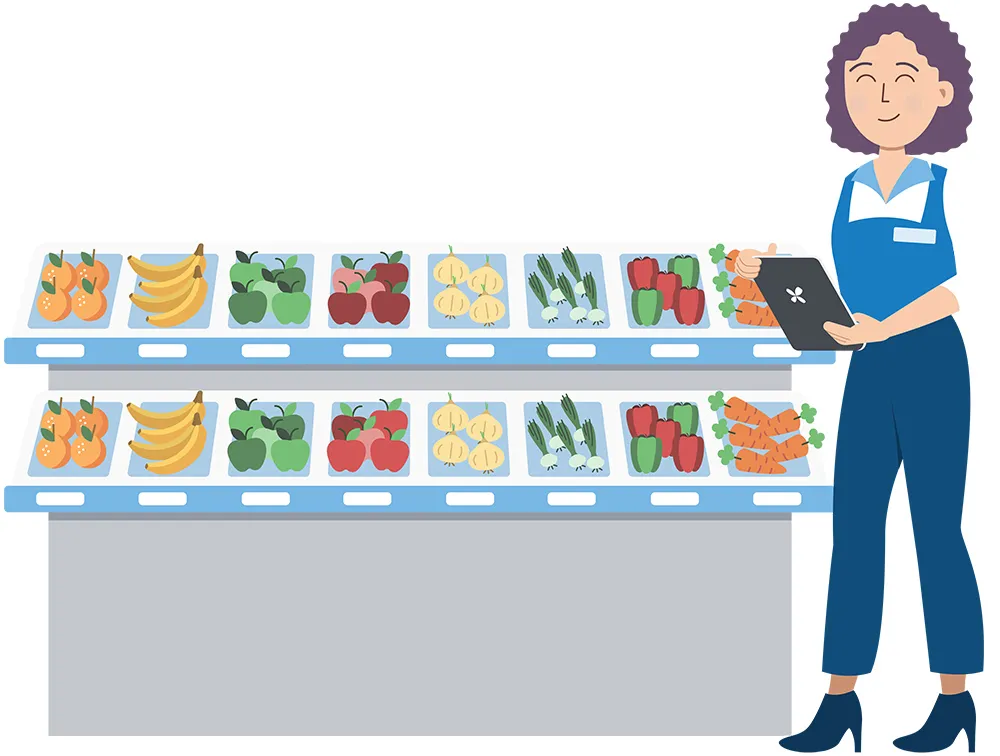
The institutional knowledge that compensates for the absence of good systems walks out with every departure, resetting the operational baseline of the department.
Retailers typically see three persistent knowledge gaps when their turnover is high:
1. Learning local seasonal patterns
An experienced manager is like a human algorithm. They have years of seeing a store’s rhythm – when to expect the rush, when to expect the drop off, how their department’s cycle fluctuates over the year. For example: If they’re working in a town with a large university, the manager is likely to know that the influx of students in September will trigger a higher demand on pre-cooked or pre-prepped food that could drop off as the semester moves on and student loans drop off.
2. Understanding unique customer context
They are often embedded in their local community. They know that while in many places an upcoming storm might mean bread and milk flies off the shelves faster, in this particular area they’re more likely to see fresh fruit and certain brands of beer and wine increase in demand. Product demand can change drastically depending on the customer base who frequents each store, and without planning software that learns these unique store quirks, it’s only long-tenured staff who could know these things.
3. Working around data gaps
An experienced manager who’s always done it a certain way can, sometimes, work around a flawed system. Pen and paper, side notes, and decisions that do not get logged or recorded get lost when the person leaves the role. The new hire could be working with an incomplete picture, which inevitably leads to an initial period of frustration and inefficiency until they re-discover the institutional knowledge that helps the store run more smoothly.
These gaps do not only crop up on a team member’s departure, either. They can show up any time a less experienced colleague is covering a shift and attempts to complete a task which is effectively gatekept by one person’s know-how. This can create inefficiencies and wider issues in store performance.
Why the store operations execution gap persists
The shrink problem often looks like a people problem because it’s distributed. Small losses across hundreds of stores, dozens of departments, and thousands of daily decisions add up fast. Looking at them individually, they can be waved away as team members making bad calls, which can lead retailers to attempt to solve the issue by changing who is making these decisions. But the same patterns often appear regardless of who is managing the stores, which points to a shared structural cause that cannot be solved with hiring.
When decisions are made without the right data, and no workflow closes the loop, stores will keep reacting to what’s happening, instead of planning for the inevitable messiness of day-to-day store operations. When the markdown doesn’t feed back into the order, the bad count doesn’t surface as the cause of the waste it created, and the cycle will only continue.
The execution gap hasn’t closed because it hasn’t been treated as the priority. The supply chain transformation was the investment and urgency went upstream, while the store managed with what it had.

It’s time to close the store operations execution gap
The standard for what a customer expects from a store has quietly moved past what most stores can consistently deliver.
Shoppers today move fluidly between online and in-store and expect the two to be seamless. They don’t see that the algorithm was right, but the shelf was wrong. When there’s phantom stock, an unfulfilled online order, or an empty production counter the customer can see with their own eyes, that failure is a broken promise the customer experiences directly. And increasingly, they’re willing to switch retailers over it rather than tolerate it.
The same customer-facing pressure is landing on top of three things making it harder to absorb:
- Labor costs have jumped to the top of retailers’ concerns, which means you can’t just throw more staff hours at fixing execution manually.
- Scheduling regulation increasingly locks labor plans in advance, so there’s less room for the kind of flexibility needed.
- Margins are thinner, so there’s very little buffer left to cover the cost of getting it wrong.
The competitive landscape is more intense than it has ever been. Low-cost competition, online outlets, and one-stop shops are all eroding potential basket sizes (and therefore impacting margins). With more competition, customers have more choices.
Closing the gap in store-level execution is something customers will notice when the store runs more smoothly, staff is knowledgeable, and the right products are available at the right time. Closing the store operations gap is the key to creating the shopping experience customers want.
The problem is that most retail store ops systems don’t connect, they don’t surface information when a decision is made, and they don’t close the loop between action and consequence. But store teams with the right data, at the right moment, and in a guided workflow produce better outcomes than store teams making the same decisions by instinct.

How to close the store operations execution gap
Closing the gap might seem daunting, but it doesn’t need to be a massive undertaking. This is one type of project that can start small and build on itself slowly.
Start by identifying the department where the margin bleeds most. What can you do to impact operations in that department quickly? From there, build a sequence that lets the results fund what comes next.
At RELEX, we’ve found standard store operations improvement plan often requires four steps:
- Improve exception-based ordering: Shift from counting everything to reviewing only the 2–5% of items that actually need a human decision.
- The self-funding sequence: Each capability funds the next, so the transformation doesn’t require a single large upfront commitment; shrink savings from ordering fund markdowns, markdown recovery funds production planning.
- The pilot model: Prove value in five to ten stores over eight weeks before scaling, giving retailers a low-risk on-ramp rather than a leap of faith.
- The compounding effect: Because the plays run on connected data, each one gets smarter as the next is added. The AI models improve over time, and the starting point for each new play is higher than the last.
With the right approach, store operations can see the same gains in efficiency that supply chain has been enjoying recently. By overcoming this hurdle, retailers can improve margins, foster customer satisfaction, and gain a competitive edge.
Looking for more advice on closing the execution gap? Check out our September 17th webinar to learn what it takes to fix store execution, and how AI is reshaping fresh ordering, inventory, and markdowns.
Written by

Related Articles
QSR supply chain planning: overcoming operational friction with ingredient-level forecasting and franchise-wide visibility
Discover how connected QSR supply chain planning closes the gap between the kitchen and customer demand.

Case Study: Grupo Vinoteca
See how Grupo Vinoteca, a Mexican wine and spirits distributor, reduced lost sales by 34.7%, cut store replenishment time by around 50%, and saved on inventory with RELEX's unified planning.

Customer Story: Biyoute Trading
No Stockouts, No Overstock at Chinese New Year: BeYouTe's President on Building a True Partnership with RELEX.