In-store production: Stop paying the price for disconnected planning
Jun 5, 2026 • 7 min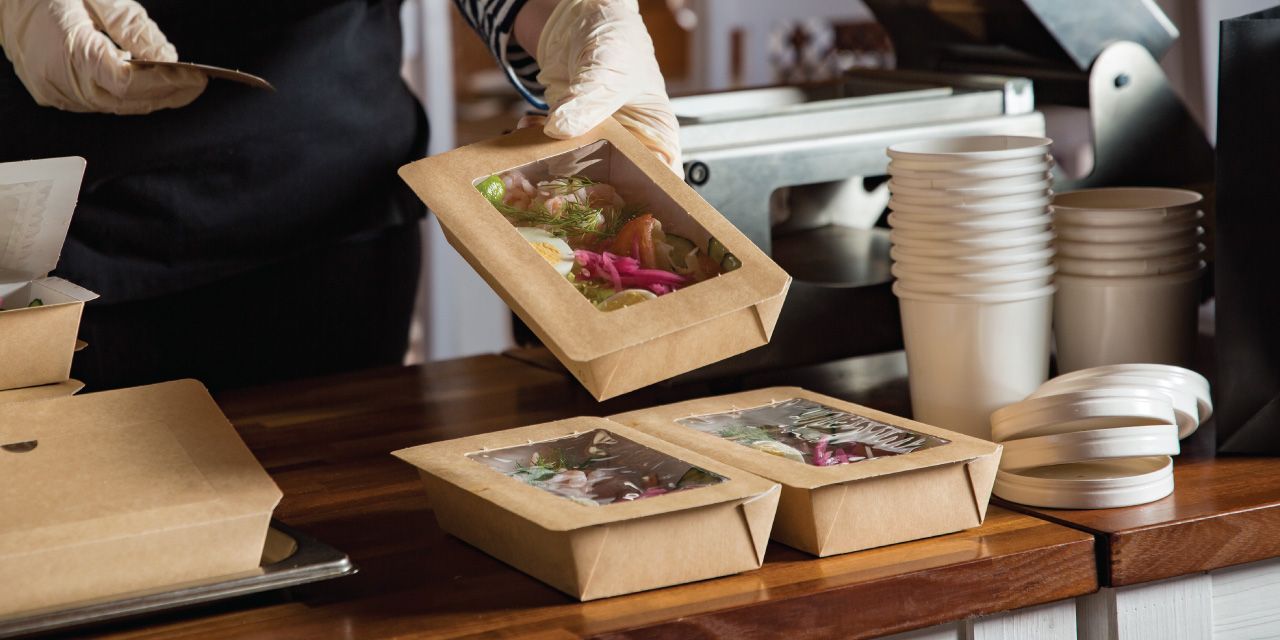
It’s 5 a.m. in the bakery department. Bread loaves are in the ovens, the bagels are done, and the bakers are busy getting everything ready for the morning rush of customers seeking out breakfast ingredients. But there’s no time for rest. As soon as breakfast is done, they have to start preparing cookies and cupcakes for the afternoon rush.
Getting these transitions right is vital because getting them wrong has cascading effects across the rest of the day and the entire store. Misjudge a morning rush and the department could end up with excess inventory by afternoon, markdowns the next day, and eventually costly shrink.
In-store production departments are among the most complex in retail, with challenges far beyond just getting the recipe right. Success requires the right ingredients, plus accurate time and equipment insights to properly plan production — but most retailers use tools that aren’t up to the task.
To get in-store production planning right, retailers need a platform that can optimize production based on real demand while simultaneously handling ingredients, pre-production requirements, and recipe management.
Top in-store production challenges

Most production departments generate significant business and growth when done right. Optimizing them can drive revenue, profits, and customer loyalty.
But these departments — whether bakery, deli, or sushi counters — too often run on a combination of paper-based production logs, on-the-job experience, habits, and instinct.
But overproduction stemming from these suboptimal methodologies leads to markdowns. Underproduction leads to missed sales. If there aren’t enough employees scheduled for a shift, they can’t make enough product; but scheduling too many employees drives costs too high. These outcomes hit already-tight margins. Even a small margin loss can be the difference between making or losing money.
Retailers often operate with siloed systems: fresh replenishment in one, production tracking in another, workload forecasting in a third. The result is decisions made in isolation. The bakery team doesn’t know what ingredients are already on order and may miss pre-production steps, like thawing items at the right time. The deli manager doesn’t know that a promotion in another department is about to drive a spike, doesn’t order enough ingredients, and can’t produce enough to meet demand.
Point solutions may address pieces of the problem, but they force teams to manage in isolation rather than as part of a connected retail operation. What’s missing is a platform that connects in-store production to the full supply chain upstream.
Why production departments are so difficult to run

Production departments require predicting demand and making the product, which is why they are far more complex than departments responsible for packaged goods.
The demand forecast drives a production plan, which drives ingredient orders, which drives labor scheduling. Each of these steps adds lead times, constraints, and potential issues, with each serving as a domino threatening to topple the others. For example, a retailer with the right forecast but the wrong employee shift schedule could face serious quality issues. In another case, the right ingredients and the wrong batch timing could result in empty shelves.
The complexity of each component accelerates how quickly each domino falls and determines the scope of the chain reaction. Take a bakery department, which can run dozens of SKUs with different prep times, ingredient requirements, and shelf-life windows. That setup is already difficult to manage without any added challenges.
But demand shifts across the day. Morning pastry customers are not the same as afternoon snack buyers or shoppers looking for dinner ingredients or prepared meals. Production must shift with them throughout the day, turning the demand forecast into a moving target.
And even when the forecast is right, store constraints can prevent proper execution. Production plans need to account for the number of ovens available, batch sizes, shelf and table capacity, and production time — not just ordering accuracy.
Unfortunately, these challenges don’t stay contained to the department itself. External demand drivers (like holidays, local events, and weather) can spike or collapse in-store production demand with little warning. So do events in other departments. If the meat department is running a barbecue promotion, deli sides like potato salad are likely to see an increase in demand.
All of these issues are connected to labor. Retailers need the right people at the right time to execute, not just the right forecast and production plan. By the time you know you need more labor, it’s usually too late to get it. While it’s possible to adjust a batch size or pull products off a shelf, it’s not usually possible to conjure up a trained baker at 6 a.m. after someone realizes the forecast underestimated demand.
What connected production planning actually looks like with RELEX

The biggest challenges of in-store production share a common root: decisions made in isolation. The answer is connected production planning, linking forecasting, ingredient ordering, labor scheduling, and store execution into a single, coordinated workflow. That’s why RELEX was built to include every part of in-store production planning in one platform.
AI-driven intraday forecasting
On the RELEX platform, production recommendations account for time-slot demand patterns, external drivers, and historical production performance, not just average weekly sales. Store constraints like oven capacity and batch sizes are factored in, so plans are both executable and accurate.
Guided workflows and product prep
Store employees are guided through the steps needed to make products ready on time, including pre-production tasks like thawing frozen dough that’s been par-baked or partially prepped. This helps ensure consistency regardless of employee experience level and makes onboarding easier in high-turnover environments.
Exception-based workflow
Store employees can focus only on what needs attention: high-priority tasks, deviations from plan, and anomalies, rather than reviewing every item manually. This is how experienced and inexperienced employees alike can run a department consistently.
Recipe and ingredient integration
RELEX production recommendations are tied to what’s actually been ordered and what’s in stock. The platform can auto-import recipes from photos or PDFs, manage allergen and nutrition information, and push centralized recipe updates with instructions and photos directly to stores.
Guided mobile execution
Front-line employees in a bakery or deli aren’t at a desktop. With RELEX, assistance reaches them on the floor, on any modern device, in a format that reduces the mental load instead of adding to it. Sophisticated store execution guidance is especially relevant for high-turnover environments and franchise operations.
HQ visibility alongside store-level guidance
Department teams get daily production guidance and can update inventory and adjust orders in real time. Central teams get dashboards showing performance across the enterprise. Both levels get what they need without manual reporting.
Crucially, central teams can use that performance data to identify which stores need training or corrective action, targeting improvements precisely rather than rolling out changes chain-wide. This lets RELEX users manage by exception, zeroing in on the locations struggling with waste, production consistency, or margin, and determining what those specific locations need to improve.
Connection to upstream planning
In-store production is downstream of supply chain decisions. When production planning lives on the same platform as replenishment and DC ordering, the loop closes. Decisions at the store level are informed by what’s already moving upstream, from inbound deliveries to supplier shipments into the DC.
In-store production solutions for convenience retail
In-store production isn’t a grocery-only challenge. Convenience stores are increasingly leaning into freshly prepared foods too. That’s not surprising given how much in-store production has grown in the convenience sector. NACS reports that 73.9% of convenience retail sales come from in-store foodservice in 2026 (up from 66.4% in 2021).
The operational reality looks different in convenience, though. Think hoagie rolls ready for the lunch rush, pizza dough prepped the night before, or a counter that functions more like a QSR than a traditional deli. The production process steps aren’t fundamentally different from grocery, but the product set, the context, and the customer expectations are.
Convenience retailers typically work with smaller square footage for storage and preparation. Overproduction is a harder problem to absorb: markdowns are less viable when customers are stopping in for immediate needs (as opposed to their larger weekly grocery store run), and shrink hits harder when margins are already under pressure from factors like fuel prices.
Franchised retailers, which are more common in convenience, face an additional layer of complexity. Many franchisees operate one or two locations without the budget, expertise, or capital to invest in digital tools. Without an in-store production tool, they have no reliable way to manage production margin or align output to actual demand.
The planning principles that solve the problem in grocery translate directly to convenience. The challenges and circumstances may differ, but RELEX can serve both.
Building real in-store production capacity with RELEX
In-store production departments are not an operational afterthought. They are among the highest-complexity, highest-stakes areas of the store, and increasingly a competitive differentiator.
Grocers and convenience operators who build real capability here reduce shrink and protect the departments that set them apart from online and discount alternatives. The retailers still managing production with disconnected tools and institutional knowledge will keep absorbing the cost in waste, markdowns, missed sales, and the labor it takes just to keep up.
In grocery retail, margins are thin and customer loyalty is hard to come by. But shoppers reliably return to the store with the bakery that always has fresh bread at 5 p.m., the deli counter that consistently makes the best sandwiches in town, the hot bar that’s never out of their favorite comfort foods. In-store production, done well, is one of the few things a grocery retailer can offer that a delivery app or discount format simply cannot replicate. That’s worth getting right.
Getting it right starts with the right platform. See how RELEX connects forecasting, ingredient ordering, labor, and store execution in one place.
Written by

Related Articles
QSR supply chain planning: overcoming operational friction with ingredient-level forecasting and franchise-wide visibility
Discover how connected QSR supply chain planning closes the gap between the kitchen and customer demand.
Agentic AI in manufacturing supply chain planning
Learn why most manufacturers need both general and tailored agents, meet the five core RELEX agents for manufacturing, and see how RELEX Open lets you deploy, connect, and extend AI across your supply chain planning.
Case Study: Grupo Vinoteca
See how Grupo Vinoteca, a Mexican wine and spirits distributor, reduced lost sales by 34.7%, cut store replenishment time by around 50%, and saved on inventory with RELEX's unified planning.